You make an interesting point. Why would Google publish this, something that will only deprive them of revenue? They've already banned some browser extensions and Android apps that do this.
Maybe it helps them in some way with legal compliance, or just PR (gives them an easy way to fob off people with concerns), the benefits of which would significantly outweigh the lost revenue from the miniscule percentage of Chrome users who will install this.
Kind of a strange analogy. Walmart provides immense value to millions of people. They've developed an infrastructure that delivers cheap products to areas that otherwise would have few other options.
Oracle is the antithesis of Walmart. They provide insanely expensive options to corporations who are already locked in to their products.
One of the saddest days was when Oracle bought Sun and effectively killed all their open source projects overnight, like OpenOffice and MySQL. Yes, those things are still technically around, but they're not getting any serious development, and all the core developers of those projects have forked them into new open source projects.
Walmart has contributed to the decline of small businesses in rural areas[0] and they compensate their employees so little that they officially encourage their employees to take advantage of the social safety net[1] despite ever increasing annual net income[2] captured largely by the non-productive latter-generation Waltons.
Not to go too off the rails, but they only “contributed to the decline” by being a better option for customers that switched from small businesses in rural areas to Walmart.
A lot of small businesses are bad. Bad hours, bad selection of products, bad customer service, bad prices.
They’re often held up in some idyllic form, but it’s clear from the behavior of their own customers that Walmart provides these customers more value.
My wife teaches in a small, poor town that is off the beaten path. It is just outside of what most would consider the suburbs (we live on the edge of a suburb and she commutes through rural area to get there). The only grocery store in town is what used to be a locally owned and supplied store, and is now under the branding of a "Piggly Wiggly Xpress." The options are to go there, Dollar General, or drive almost 30 minutes to another option, one of which is a Walmart. Everyone who can just drives to the Walmart.
The local grocery store is the worst excuse for a grocery store I've ever seen. There are only a handful of fresh vegetable options, including $1/lb bananas and $5/head iceberg lettuce. Everything is overpriced and there are very few healthy food options. Apparently a lot of people due to transportation limitations can ONLY shop at this store (or Dollar General), which is expensive and mostly has unhealthy options. There are talks of a Walmart coming in, and I have no doubt it would be a huge quality of life improvements for folks in the town.
And then they leave the area after a while leaving nothing for anyone. I posted the links for a reason and that's because they support my claims. People like to ignore the facts in favor of their feelings and emotions.
They're held up in some idyllic form because while they're worse for customers, they're on average much better for employees. 'Small business' isn't just meant to be heartwarming when talked about as important - small businesses also spend a much larger percentage of their money on wages.
This feels like a false dichotomy to me (if it’s true which I’m not certain of).
It’s not very good for employees if your small business customers don’t like you and as a result you have to close.
A local car dealership may be great for its employees by ripping off customers and generally being a terrible experience, but I won’t have much sympathy when direct to consumer sales come and wipe them out.
Small businesses need to offer something of value to customers that’s real and differentiated as opposed to a narrative of their own self interest. In short - they have to be competitive. There’s no reason they can’t do this while also being good to employees.
A lot of the complaints I see come across as sour grapes and trying to legislate their existence rather than just being better and caring about what customers want.
At its best capitalism is a force for aligning value and interests between provider and customer. On net this leads to more efficient distribution and better outcomes for the most people.
At its worst it’s rent seeking and leveraging local power over people without choice. Small businesses often fall on that side of the spectrum to me.
It's not that simple. Small businesses, like small anything, are less efficient than larger versions. The inefficiencies inevitably bother customers.
It just so happens that in business, much of that inefficiency is the number of employees required per unit of economic activity. Ultimately all employees are an unwanted cost to the consumer. Small businesses have fewer options to avoid that cost, so they account for more employment.
He's opening new Tesla facilities in Texas, but currently he hasn't formally announced he's completely pulling operations out of Texas, although he's threatened to in the past.
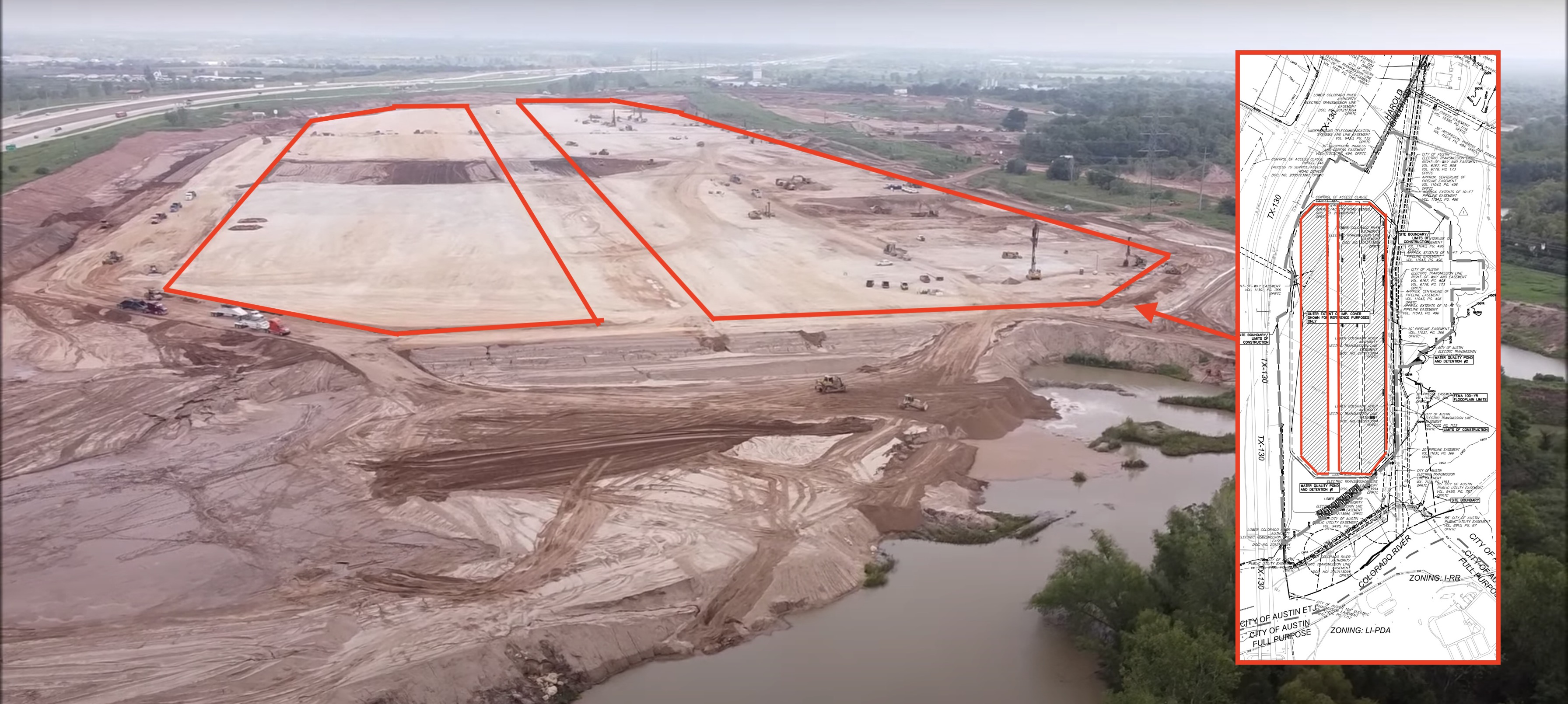
That size comparison doesn't actually show a comparison. It only has the footprints for the other factories, and the entirety of the land purchase for the texas factory. What a bizarre thing!
> Your second statement struck me, and I was curious how the manufacturing sectors compare for California vs Texas.
And Wall Street was great in New York until they moved to Florida, North Carolina, and Hawaii... and Oil headquarters were huge in California until they moved to Texas... and Big Auto was big in Michigan until they moved to the South and on and on.
What is so mind-boggling about all these people not seeing the trends is acting like what is is what has to be. There's no divine right for these companies to remain in California. It has a terrible business climate. Were it not for oil, agriculture, and defense in parts of CA the Bay Area loathes, there would be very little actual "stuff" produced in California. Software has no geographic attachment to the land like ag or oil, so there's no reason they have to be forced to the Central Valley. They can just leave.
To be fair, here's the complete list of companies in the known universe that don't try to avoid taxes or regulation:
[error data not found]
There's a cost of moving. California's taxes and regulations are bad, bad enough to force many out, but not all. If things continue on their present course, even Google and Amazon, who personally like the political climate there, will have to start looking elsewhere.
Most startups don't care about taxes or regulations. Taxes are a rounding error (or literally zero) when you're small and not making any money, which will be the first several years of a startup's life. When you get big you can hire an army of lawyers and accountants to keep all your money in Ireland and avoid them. Regulations just get ignored. When you're small, you're too little a fish to go after; the regulators are busy suing Uber and Lyft and Facebook and Google. When you get big, you can hire an army of lobbyists and PR people to change the regulation, just like Uber and Lyft did.
> Most startups don't care about taxes or regulations.
Yes, but they care about cost. And the reason that everything is so expensive in California is regulation and taxes. Acting like these are separate things is not a valid assumption.
I don't believe that the reason everything is so expensive in California is regulation and taxes. Here's why:
The North Coast (Eureka, Crescent City) and Central Valley (Chico, Fresno, Modesto, Bakersfield) are under the same regulatory and tax regime as the rest of California. How expensive is Eureka? Houses average $300K [1]. Restaurant meals are about $10-12. [2][3] How expensive is Bakersfield? Houses are about $250K [4], meals are about $11 [5]. In other words, they're not much different from the rest of America.
I think that much of the contemporary political narrative gets the causality wrong. The Bay Area and LA are expensive because they are home to global monopolies that funnel cash from all over the world into a small region. There's not much land available in these metros, there's a lot of money floating around, there are a lot of people who want to move in to get a piece of this money, and so they bid up the prices of scarce goods. Regulation comes later, to curb the power imbalances from having corporations with more resources than many nation-states, and taxes come so that the state can get a piece of the huge cash flows coming in.
But the primary driver of cost-of-living is being the sink for the disposable income of 7B consumers. Eureka's primary industry is timber, and Bakersfield's is oil. Both of these are commodity markets where the money goes elsewhere in the value chain. Not so with tech and entertainment.
You know what they don't have, insane zoning restrictions that prevent housing. For example, the Houston MSA, which has almost no zoning restrictions is within 90% of the population (and 80% population density) of the Bay Area 9 county MSA with an average house price of... $249K at 2,000 sq ft.
And there's a reason I left Bakersfield and moved to Austin. It's because PG&E energy prices are benchmarked at Bay Area temperatures, and they have progressive pricing. Because I had a server rack in a garage in super hot (110+ F) summers, I was paying over $600 a month in energy bills in a tiny 1000 sq foot house in a ghetto. If I had lived in a 4 bedroom house, I would have paid less in energy.
And just on a secondary, personal note. Houses in Houston are way, way nicer than houses in San Jose, Oakland, San Francisco etc. This is one of those things where I know that people have just not experienced living in other places when I hear quality arguments around housing, food, or amenities.
It's just not that nice in San Francisco. Seriously. The food is just downright bad in quality and variety compared to even Austin, much less Houston. The housing stock is dreadful. Service is slow. The quality of things in Houston is better than the Bay Area, irrespective of cost.
I'll grant you that Bay Area zoning is fucked up. That's under local jurisdiction, though: the state keeps trying to override local zoning requirements to build more housing and keeps getting shot down at the ballot box.
My sister lives in Houston (well, Sugarland technically), so I'm well acquainted with the metro area. It's a very different lifestyle. The housing stock in the Bay Area is uniquely terrible - most of it is 3BR Eichlers that were mass-produced in the 60s. But people don't spend all that much time indoors. Pre-COVID, my wife and I were out every weekend to museums, hiking, the beach, picnics, restaurants, etc. There are 4 parks within walking distance of my home, 2 commercial downtowns, then the mountains are 5 minutes away, the beach 20, SF 30, SJC 30, the Bay 5, etc. And the weather cooperates - it's a consistent 70 and sunny for 8 months out of the year. Meanwhile, my sister's place is 50% larger for a quarter of the price - but it better be, because it's 100 degrees with sweltering humidity for 8 months out of the year. They need to take a highway onramp to get anywhere. They have no friends, because everyone they meet is so far away. Downtown Houston is a little different (my sister went to Rice, Rice Village is pretty nice), but also a completely different story in terms of housing prices - you start seeing million dollar homes once you get to the downtown areas of Houston.
Different strokes for different folks. We could've purchased my sister's house for cash at the time they bought it. I floated the idea by my wife, and she was like "But then we'd have to live in Houston!"
Plenty of company CEO’s know little to nothing about taxes and simply hand relevant details to a different firm. Growth gives exponential returns, taxes give linear returns which is why they can be ignored for years. Regulations are similarly irrelevant for most companies, as long as the competition needs to play by the same rules they tend to zero out as just a cost of doing business.
> taxes give linear returns which is why they can be ignored for years
This isn't true at all. The effect of taxes compound just like anything else. E.g. if Warren Buffet had originally incorporated Berkshire as a Bermuda-based reinsurer, he'd be worth over $400 billion today. If he didn't structure it as an insurer at all he'd only be worth $20 billion.
Tax savings compound at whatever the long-term ROE of the corporate entity. Therefore tax arbitrage is most important for hyper growth companies.
When you’re growing at even 10% per month the difference between 50Billion and 400 billion in 50 years is a rounding error on a rounding error. Further, diminishing returns means your stuck investing in ever less profitable operations as you grow. These will often lose money, just look at say Microsoft or Google to see how little an extra 100 billion 10 years ago would give them now.
Nobody is saying they don’t have any upside, but as always it’s the opportunity cost that kills you.
Corporate entities have to make quarterly payments. Let's assume you're a $10 million company with 10% monthly ROE/growth. Paying an additional 9% in California corporate tax rates will result in the loss of a billion in market cap within five years. Literally a third of the terminal value of the startup.
Point taken about diminishing marginal returns. But you can see that even taking that into account, the impact of lax tax planning for shareholders is humongous. (Plus many startups are in winner-take-all markets, and effectively have increasing returns to scale.)
The opportunity cost is real. Tax arbitrage will take some amount of bandwidth. But it often takes much less effort to raise cash by minimizing taxes than it does to raise additional equity funding. The former can mostly be done by the CFO in the background, whereas the latter requires the attention of the founders.
That a 9% income tax in California corporate tax rates are on profit. A profitable startup has unlimited runway so the classic X month of runway company is facing ~0 income taxes.
Further it assumes your capital constrained, which might apply to some fast growing business but if your the magical unicorn of a profitable fast growing growing company then capital is the easiest problem to solve. Worst case you might trade a little extra equity, but again that’s linear dilution often based on growth at the current rate.
PS: If your growing 10% per month it takes 6 years to go from 1 million per year in revenue to 1 billion per year in revenue. It’s very fast, but hardly instantaneous. Keeping that up for 12 years means 1 trillion in revenue per year which is extremely rare. Growth will slow eventually, and when it does there are a huge number of things to optimize.
I partially agree. However, Elon Musk has personally moved to Texas, and he's begun moving some operations of his companies there as well, like SpaceX and Tesla. And those are certainly disruptors.
You're underestimating just how toxic California's political climate has become towards business. Democrats see them as bottomless pits of money to be abused and extorted, while giving them nothing back in return. Some companies are still willing to put up with it, but many, both companies and individuals, are getting out. Already, California has a net immigration deficit. The only reason California's population isn't shrinking is due to its local birth rate.
The political climate in California is astonishingly toxic and disconnected from the realities of the market. I for one cannot wait to leave this place for greener pastures. California's answer to everything is raise taxes. And everyone cheers. And nothing gets fixed.
I'm willing and even happy to pay taxes for commensurate benefits. I don't really feel like I get that in CA. It's like an extremely inefficient engine.
Ironically there is one way in which the tax benefits are ABSURDLY generous - unemployment. When I saw how much that returned I was staggered. Perhaps I'm in an income sweet spot, but when I calculated it, it was far more assistance than I would have expected from a non-French government.
I'm aware of course that state tax sits on top of Federal tax, but when you factor into the equation what responsibilities are Federal and not state, it looks astonishingly poorly distributed.
I'm not really sure how the high cost of living is anything other than a milestone around the area's neck. I've lived in v-high COL areas, but that has always gone hand in hand with extreme density, which could easily be viewed at as a simple tax for the provision of world-class services. Somehow I'm out here in suburbia paying Megacity rates.
> It's almost the end of 2020 and California hasn't passed a single tax increase.
Prop 19 involves both additional exemptions and limitations on existing exemptions from full-value assessment, but is projected on balance to be a net increase, and is definitely an increase for some taxpayers, and it passed. So, while I agree with your general point, this claim is technically overstated.
This leaves out key context: Prop 19 is designed to rollback some of Prop 13, which has been a financial disaster for CA since the voters passed it, many decades ago. You can trace a lot of California's "let's raise taxes" issues to the lack of revenue caused by Prop 13.
The trick is, will those voting for taxes to be raised do the same when they relocate elsewhere? California is not a dictatorship. The people of the state have voted for this situation.
I realize that not everyone in California votes and thinks the same. Those leaving the state might not be reflective of the voting patterns of the state as a whole but doubt this migration out of California is impactless on the places those leaving go to.
Yes, that is a big problem. People don't seem to learn their lesson. CA peoples leave CA and go to austin and we're already seeing some of the same things happening there as in CA, where housing supply is restricted and of course, at that point housing prices go up again.
People just never learn the fundamentals of economics and how those decisions lead to economic hardship for so many, that's the real problem.
> People just never learn the fundamentals of economics
Maybe. Or they know if they buy today and make it hard to build, they can go somewhere new with a big pile of money later. They got theirs, and they don't care about the others.
In actually, it's a big and heterogeneous group of people. I expect some never learned, as you say. Some are jerks, as I described. Some just don't think deeply enough about their policy choices, and some think there are post-Econ 101 reasons why the Econ 101 dynamics (while important) aren't what dominate.
And of course there are some of us Californians, staying and leaving, who do think it should be easier to build.
SpaceX moving specifically to Brownsville, which is the point closest to the equator in the USA other than Florida. The spaceport will be closer to the equator than Kennedy Space Center.
>These claims are being slaughtered in ongoing court cases, and many of them are objectively batshit,
The Mike Kelly case in PA, arguing that the law allowing mail-in ballots was illegal, was ruled by a judge as completely legally valid, but was thrown out of the state supreme court because "they waited too long to complain".
So, no, not objectively batshit. If the GOP had filed that case in January, Trump would have won PA...assuming the same supreme court didn't throw out their case for some other arbitrary reason like "filing too soon."
The Democrats outplayed Republicans. Democrats passed an un-Constitutional law that helped them stuff ballot boxes with ballots that were almost certainly harvested or bought. If we're to believe the election results and voter turnout in, say, mostly black Philadelphia, Joe Biden is a more popular politician than even Barack Obama. Only an idiot would believe that. But still, it serves Republicans right for underestimating the extent to which Democrats would cheat.
The judge emphatically did not rule on the merits of the case, simply that there was no reason to proceed further due to laches. A ruling on laches says nothing about the validity of the argument.
It's actions like that that give me reason to doubt the results of the 2020 election. People weilding the truth don't need to censor people. They let the facts speak for themselves, and they let free discussion sort things out.
Youtube doesn't censor Holocaust denial videos, Chinese propaganda, people claiming Hillary is still the rightful winner of the 2016 election, and a host of horrible things. Nor should they. People should be free to discuss what they want, not what a Youtube CEO things they should want.
But people complaining about 2020 election fraud is where they draw the line? This really smacks of Orwellianism. "Say Biden is the President, or we'll ban you." What the hell is happening at Youtube?
Unfortunately, for many of the online games that have logins, Steam forces you to create a new login, since they track commissions based on the accounts created inside Steam.
For Linux users, this if you want to use Steam, you have to start from scratch. I'd rather stick with Wine/Lutris, even if it is buggier.