I remember thinking "I guess they want to get more of the tech community's mindshare to promote their job board" when Dice bought Slashdot. With the way they've alienated the tech community by trashing Slashdot and SourceForge, I wonder how many tech people will use their job board now.
"permit authorities to target "lone wolf" suspects with no connection to specific terrorist groups, and make it easier to seize personal and business records of suspects and their associates"
If I search lots of technology and military related topics, or do any system-admin work, or use any privacy-enabling services (VPN / TOR), then my friends/family/associates and myself would likely fall under those categories.
My concern is there should be a data-retention policy due to constantly changing laws.
If 20 years from now I want to run for president, then all it would take is to search for records in one of the many caches of NSA collected data that other agency, state, local, and even foreign law-enforcement have collected over the years. That would allow a large number of people to have the power to easily find something that would distract me enough to pull me out of the race, such as inappropriate text-messages/emails that a cheating spouse sent in the past.
Even when the president was an outright crook and used some of the machinery of state (and some other outright crooks) to dig for dirt on his opponents, he wasn't able to accomplish this through the national security services. Oh and he got caught and forced to resign.
There are many good reasons to be concerned about surveillance, privacy, data gathering, etc. Your future presidential campaign is almost certainly not among them.
Deliberately missing the issue. Forget his future presidential campaign.
How about every future presidential candidate? The existence of a panopticon corpus of information on them which is only accessible to a certain group, grants power over them to that group. In the Internet age, the NSA's policy of tracking everyone is functionally vetting and accumulating blackmail material not just on presidential candidates (where our scrutiny veers towards the ridiculous), but on anyone who ever wants to enter into any position of power. No human being, much less human organizations, could remain uncorrupted by that level of influence over power for any duration of time.
If these policies are not changed, eventually it takes almost negligible amounts of misuse before the NSA or parties within the NSA are quite literally running the country & the world. It takes perhaps a solitary bad actor in the organization with this level of information to merely tip the balance in favor of bureaucratic survival, shift one election or pop an adultery scandal in the way of one board member on one telco. It would require a fanatical level of self-scrutiny and belief in the norms of liberal democracy to self-police against these durable incentives, and obviously that doesn't exist.
Maybe having access to everyone's Instagram account and Google search history doesn't immediately sway the balance of power in 2001, but every year that our country doesn't cut out this brain tumor, it gains more power over us; Our odds of retaining some semblance of control over this organization drop. Quite soon, there won't be any technology-phobic individuals left in our positions of leadership. That day, control over this corpus of information will become a fulcrum that can move mountains.
In writing _1984_, contra to many interpretations, Orwell wasn't afraid of the concept of tyranny. We have had many tyrannical governments before, and documented their rise and fall. He was terrified of the singular notion that the novel power of technology and panopticon surveillance, might create a powerbase which was functionally immortal, a tyranny that could never fall to dissenting calls for change; That maybe technology had made the power of 'dissent' obsolete. If that comes true, we lose the power of self-determination forever.
Is it still considered too tinfoily to believe that presidential (and indeed party primary) candidates are already thoroughly vetted by powerful people long before any ostensibly democratic process is allowed to take place?
All I can say is that Dubya Bush is lucky he went to school before Facebook and Twitter existed. Even so, some of those party photos still made it out to the public.
The same goes for Bill "didn't inhale" Clinton.
My imaginary black-hat that hangs out on my shoulder whispers into my ear that part of the political vetting process is now either finding and securing the existing blackmail material or manufacturing some via tricks and traps. Anyone who does not have a readily-pulled lever is prevented from appearing in the news cycle, or simply libeled and slandered.
My imaginary white-hat says that virtuous folk simply choose not to dirty their hands with politics. A person who does not compromise his principles cannot compromise enough to be effective in the halls of power.
Calling the issue misinformed, ahistorical and overwrought is not missing the issue, it's just calling it that. Instead of reading and citing Orwell, read Bamford. You'll find a history of US security and law-enforcement agencies engaging in things far more illegal than anything that's come to light in Snowden's disclosures.
You'd be hard-pressed to find among them illegal activity directed at suppressing mainstream political opposition. That would be the kiss of death for any such service.
It isn't that these things are not terrible or worthy of scrutiny, opprobrium, or if you prefer, outrage. Suggesting that Western liberal democracy is somehow in unique peril because of them or 'because internet' is, and I'll say it again, silly. Western liberal democracy has easily survived a lot worse.
> Suggesting that Western liberal democracy is somehow in unique peril because of them or 'because internet' is, and I'll say it again, silly.
Wrong. Nothing in history has approached the ubiquity and scale of control that the currently forming surveillance machine is capable of. And yes, all of this 'because internet'. Your comparisons are moot against this distinction.
I would press Bamford into service as a proof, not a disproof, of my point.
How far do you think COINTELPRO might have gone if the FBI had been able to record every piece of mail, every conversation, had been able to lean on members of the press or members of the Church Committee with pre-recorded leverage, knowledge of every single questionable thing they'd done or said in 'private' all the way back to their childhood?
----
On August 17, 1975 Senator Frank Church stated on NBC's Meet the Press without mentioning the name of the NSA about this agency:
“ In the need to develop a capacity to know what potential enemies are doing, the United States government has perfected a technological capability that enables us to monitor the messages that go through the air. Now, that is necessary and important to the United States as we look abroad at enemies or potential enemies. We must know, at the same time, that capability at any time could be turned around on the American people, and no American would have any privacy left such is the capability to monitor everything—telephone conversations, telegrams, it doesn't matter. There would be no place to hide.
If this government ever became a tyrant, if a dictator ever took charge in this country, the technological capacity that the intelligence community has given the government could enable it to impose total tyranny, and there would be no way to fight back because the most careful effort to combine together in resistance to the government, no matter how privately it was done, is within the reach of the government to know. Such is the capability of this technology.
I don't want to see this country ever go across the bridge. I know the capacity that is there to make tyranny total in America, and we must see to it that this agency and all agencies that possess this technology operate within the law and under proper supervision so that we never cross over that abyss. That is the abyss from which there is no return.[9][10] "
----
The power we have handed these people is becoming orders of magnitude more extreme than the power it was technologically practical for an organization to attain in that era. That power is going to grow as time goes on.
The danger is not that the NSA deploys hundreds of thousands of spies to inform on and suppress mainstream political opposition, the danger is that they don't have to, to exert effective control. We're going to need something stronger, not weaker, than the reforms implemented then, to be a durable deterrent to more severe abuses in the future.
"Information wants to be free", said they. But that's not the case. The core of the idea is that information provides an incentive to everyone with access to that information, to use it. The greater the pile of information, the stronger the draw becomes. Eventually the amount of power concentrated in that information will corrupt whatever organizational structure we surround it with, so long as we permit it to be gathered in one place.
Outside the US, the examples of these abuse are numerous. Probably the most spectacular was Francois Mitterrand in France, who was wire tapping his political opponents and some other "persons of interest" (famous actress). And by using anti-terrorist powers by the way!
And having this power is not only open for abuse from the President. Lots of people in the chain of command will probably abuse it. It will also be open for abuse by law. You don't know what is OK today but will be inappropriate or illegal in 20 years.
All of this has nothing to do with the US but with human nature. The reality of any large society is that you have a portion of the population who are crooks, bullies, rapists, egomaniacs, corrupt, etc. Designing a system that relies on everyone now and forever to be honest is bound to fail. This is why the US constitution introduced so many checks and balances. And one fundamental check and balance is to limit the power of the state. And the state having so much information on its citizens, on everything anyone says to anyone, on where anyone is at any given time, on who talks to who, on who reads what is way way too much power.
We're talking about the US, right? And what, specifically, about J.E. Hoover? We're probably not going to argue that he was a bad guy. Whose presidential nomination or campaign did J.E. Hoover derail? And again, let's stipulate that this was a terrible, autocratic person who abused his decades-long position in office.
Are you actually implying that information gathered by security services has been used to derail someone's presidential campaign, even in the era of the worst of such abuses? Because that's what the OP is worried about, ostensibly. And it's silly.
These sorts of comments absolutely infuriate me. Just because we can't point to an instance where we know someone's presidential campaign has been thwarted doesn't mean we should ignore the possibility. If you wait for proof of malfeasance before taking a stand you are by definition always playing catch-up and praying for the next Snowden to bring you up to speed.
The only way to prevent tragic abuses of power is to be proactive. We cannot wait for abuses to occur, we must be constantly vigilant in recognizing potential abuses and stopping them before they occur (just imagine how effective network security would be if it were entirely reactive instead of proactive).
The world got a wake-up call with the Snowden revelations. But anyone with some technical know-how and foresight knew much of what he revealed was happening already (although I'm sure even the most forward thinking technologist was surprised at some of the revelations). I would hope the era of "but where's the proof" would be over when it comes to protecting ourselves from oppressive surveillance powers.
The only way to secure this country from domestic enemies in perpetuity is to make sure such detrimental abuses cannot occur, ever. Waiting until proof is revealed is far too late. And absolutely never trust anyone with unchecked power.
Your argument is also brain-dead in that the amount of information available was minuscule compared to now (thus avenues for abuse and relevant information was proportionately minuscule). The fact that it didn't happen in the era of the largest (known) abuses says absolutely nothing about the likelihood of it happening going forward.
If you wait for proof of malfeasance before taking a stand you are by definition always playing catch-up
And if you string together conspiracies without a shred of evidence to support them, you are by definition making shit up whole cloth. This puts you in the same irrational company as Alex Jones, Art Bell, etc , etc.
The existence of bad actors absolutely does not mean that we abandon all critical thinking and logic and rationality. There is precisely as much evidence that the NSA is blackmailing presidential candidates as there is evidence that there is a camera in my underwear drawer or that chemtrails exist.
>The existence of bad actors absolutely does not mean that we abandon all critical thinking and logic and rationality.
Rationality is not equivalent to empiricism, as you seem to be implying.
>There is precisely as much evidence that the NSA is blackmailing presidential candidates as there is evidence that there is a camera in my underwear drawer or that chemtrails exist.
But the plausibility of the two are incomparable. Given what we know about human nature and the information available, and the abuses already made public, it is a legitimate fear. This combined with the immense gravity of such abuses, a rational consideration of the facts indicates that we take proactive measures to prevent it.
You say chemtrails are implausible? We already know that the TLA's have experimented with mind control agents, ala MKULTRA (though under different circumstances) and probably other still-secret programs, so using the rubric you just described, chemtrails are also a legitimate fear.
Not really. Think of it in terms of the number of assumptions necessary for each scenario to be true. For the case of spying, the only assumption necessary is that there will eventually be a confluence of opportunity for malfeasance and someone inclined towards unethical behavior. What is the probability that these two events occur simultaneously eventually? Very high indeed. A highly plausible scenario would be simply an analyst looking up information against a political candidate they don't like and leaking personal information they find to sink a campaign. The fact that analysts have spied on romantic interests shows that opportunity and disposition has already occurred. The plausible scenarios only get more sinister from there.
When it comes to chemtrails, a whole string of highly improbable assumptions are necessary for it to be true. The probability of these two cases are not comparable.
Technically we do release silver iodine (and other stuff) into clouds for weather modification. So there is some fact in the idea, but passenger aircraft are not actively spreading anything.
Clearly, but the fact they infuriate you doesn't change my rebuttal of the OP's point. Which you still haven't addressed, short of telling me how it infuriates you. I understand you're infuriated.
Eliot Spitzer absolutely had Presidential ambitions, and certainly had ambitions for other elected office for positions other than the Presidency. He resigned as governor, and likely derailed any hope for future political office.
"The investigation of Spitzer was reportedly initiated after North Fork Bank reported suspicious transactions to the Treasury Department's Financial Crimes Enforcement Network as required by the Bank Secrecy Act, which was enhanced by Patriot Act provisions, enacted to combat terrorist activity such as money-laundering."
Replace "president" with any political position, even ones outside of the US.
I'm not actually worried about MY presidential campaign. But if there is a close race, there is always the "we have the candidates ebay/amazon browsing history from 2009" or "those text messages he/she sent to their secretary" option that could dramatically change history.
The potential for abuse is too great to not have limits on data-retention.
If a sperm tainted dress stored on a closet for a couple years can do a lot of damage, imagine a full-take database stored for a couple decades or maybe even a couple centuries.
How would anyone know if they had done so? The point is they CAN exercise this kind of power, and they can do so in ways that can't be traced back to them. So who knows if they've done it? Who knows if they will? The fact that they could is the problem. Even that shadowy hypothetical threat gives them enormous (anti-democratic) power.
In fact, the very possibility will presumably weight upon anyone considering a political career, and as such these powers will likely have an effect whether or not they are actually used.
Keeping a log for 20 years for each and every person is practically impossible at the moment, regardless of how advanced you think to seem technology is. Storage is not free and i think its stupid to keep tracking everything without a reason. If you keep logging on everything in the hopes that you may find a connection or something of that sort in the future, you'll need a lot more people to go through that sort of stuff to begin with.
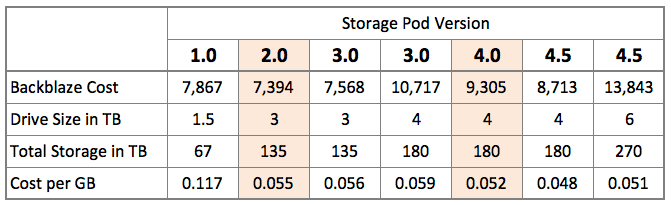
Don't underestimate how deep the pockets are of government defense funds. The NSA has a gigantic datacenter in Utah that's estimated to be storing data on the exabyte order of magnitude (thousands of petabytes). http://en.wikipedia.org/wiki/Utah_Data_Center
edit: Even if they only have 1 exabyte of storage, that's enough to keep 3.3 gigabytes of data for every single person in America (~300 million). I would wager that's more than enough to store the text from everyone's email for many years.
In fact, 3.3GB is also enough to store about 4 hours worth of speech recordings per day for a year for every single person using the best available compression. Double that since you don't need both sides of the call, and consider that the average amount of time spent on the phone is substantially less than 8h, and they can already store full voice for all US calls for many years in an exabyte.
Given that the 1 exabyte is a low order estimate given the size of the Utah data centre, you have to wonder just exactly what they are actually storing or planning to store there. If someone had access to it (and I'm not saying I think the NSA do), the site is physically big enough that you could fit sufficient storage to keep years worth of voice recordings of the total global phone call volume.
The Utah Data Center has at least 100,000 square-feet of data center space. If just half of that space was used for storage then it would be over 27 exabytes worth of storage assuming a density similar to what IBM offers.
You're wrong, storage is cheap and reliable; every electronic communication and signal you generated was recorded and indexed on your true name, even the stuff you thought was anonymous.
Right now, that recorder is temporarily paused for the most part.
An 8TB hard drive costs about $300. I wouldn't be surprised if the log of all the phone calls (metadata) of the US over a year would fit on one or two of these drives.
It might not be an official station, since it's purpose was to test the battery swapping, so the cost of connecting to the main grid might have been too expensive.
Read this related article, one of the most interesting I've read about Tesla I've seen. It talks specifically about this swap facility. Basically this one charging centre allows Tesla to claim hundreds of millions of dollars of electric vehicle government-funded rebates due to a condition of the rebates. If this centre is in fact powered by diesel, that's a whole new level of irony.
It mentions how Tesla is able to maximise it's electric car rebates by making at least one centre that can offer a fast swap capability, even though practically all (or all but one) of their customers do not and can not charge cars this way. Having a fast recharge was a key requirement to qualify for the rebates.
I think a lot of people are being misled by someone with ulterior motives.
There are other charging stalls at that Tesla station. It has demand higher than expected and as a result they needed to put a temporary generator to reduce wait times.
They might be using this as a test opportunity for seeing how feasible a generator is for charging a Tesla.
The "government funded" part is referring to state legislation, not federal.
The swap system is not open to all Tesla customers, it's invitation only to a few because they are still working out the details. Hopefully California put in it's grant program requirements that it will only give rebates for cars that are eligible, if not, then can you blame Tesla for taking the grant money? Is there even any proof that they are taking grant money or is everyone pulling the "hundreds of millions of dollars in rebates" out of thin-air?
Last, newer diesel generators and ultra-low-sulfur diesel fuel make this method of power very attractive. It might even be better than coal-powered plants that transfer over the grid due to losses and conversions.
The worse problem is that even if you do research on the developers and owners of an app before allowing a permission that warrants a lot of trust, they can at any time be sold to a scummy company or data-mining agency who exploits the trusting user-base. This is exactly what happened to SourceForge.
> Then less than 1 year later Google cancelled that project and now there is nobody to provide that service.
This made me imagine some poor, bright but new-hire Google PR employee realizing this popular (and quite correct) view of Google ("CANCEL ALL THE THINGS" [1][2]) frantically trying to figure out how to actually communicate to upper management (without getting fired) the blunt truth:
This ongoing strategy of announcing projects and promptly canceling them after a few years is incredibly damaging to the company. Google's "ADHD-like low attention span" to projects is anything but confidence-inspiring. :(
No one would get fired for saying that, but (clearly) the company has decided that the current strategy is the right one.
My take is that Google is less developer-friendly than Microsoft and Apple. Google does not rely on external developers as much, because so much revenue comes from web based, directly consumer facing products. Google is always trying new things, because they are looking for the next big user facing product. This might annoy developers who build against Google's APIs, but that is worth it because Google relies on users, not loyal developers. It is a fundamentally different approach from Windows or iOS.
I disagree, Google constantly gives developers free resources and run a very powerful and cheap cloud network. I think they are at least on par with Microsoft. I am a developer and I don't use any ms products, but I use quite a few of the ones Google offers. Google's cloud is significantly cheaper than Azure as well (actually GCN is about on par with most others, its just Azure is very expensive), I have compared many times. About Apple, I love their products, but they aren't very developer friendly. Their eco system is very closed, they don't support many tools other than the ones used to developer directly to their platform. Their eco system is just very profitable, so we put up with it. I have always seen it as, Google is the developer's company, Microsoft's the enterprise company, and Apple's the consumer's company.
I observed the same thing. Microsoft is the company who cares about developers more.
I can tell my odd experience about Microsoft: my company reverse engineered many of its products and offered APIs around products without APIs. One day someone from QA sent us an e-mail offering help if some of these products have issues with Windows 7!
Doesn't MS rely on users too? Users of Windows, instead of users of browsers, but it's still in both of their interests to get developers using their platforms.
At the end of the day, all large companies have to dip their toes in new technologies, or die. Some of these projects will work out and others won't. Small companies do the exact same thing, except instead of announcing they are discontinuing a project they go bust.
My approach is not to get too tied to any vendor's technology, because if you do, you're setting yourself up for a fall. The rise of open source and standards has made this much easier than it once was, luckily.
Yea, exactly. But fan boyism runs deep in this industry, particularly on forums. It incredible to see my collogues get so caught up in one mega corp and then spend so much of their time trashing 'their' mega corps competition. I use each for what they are worth and I enjoy to watch them come, go, and compete.
I said "But fan boyism runs deep in this industry, particularly on forums. It incredible to see my collogues get so caught up in one mega corp and then spend so much of their time trashing 'their' mega corps competition." Where am I generally calling people with different opinions than mine fan boys. I agree and disagree with many fan boys. I am a fan of the products I use, but I am quick to move to new products if I have the means and my experience with the other products is superior.
Google search, GMail, Youtube are not platforms. They don't rely on an ecosystem of external developers. Android is, but it is generally considered less developer friendly than iOS.
I get the impression that MS these days are trying to depreciate Windows in favor of their cloud services.
In a sense it is a return to the MS that was before the IBM PC, when they were supplying office and development tools to all comers (MS Office got its start on Apple computers after all).
Wow. The author of that has published numerous papers on neuroscience and consciousness, has written well-received adult literature, award-winning children's books, popular science nonfiction books, passable orchestra music, papers on fake universes modeling emergent laws of physics and he's "an avid practitioner of ventriloquism and performs his art with a monkey sidekick named Kevin"
I've done a lot of thinking and discussing around brain-transfers and what it requires, I'm really interested in reading his papers around that topic, and some of the others.
I think the rel="contributor-to" might be affecting something as well, I didn't even know that attribute value existed. I'm not sure if you can manually set that in Google+ when setting the URL or how that value is determined.
Good catch and writeup. I'd bet this technique can be applied to other sites, so hopefully Google gets this fully understood and fixed.
Thanks for your comment, dm2. I will be looking more into this.
This is by far the most logical explanation I heard till now. I want to post an update at the end of the article with your comment so other people could weigh in. Is this OK with you?
You can send me a more in-depth explanation if you want.