Dvorak left and right have the distinction of being available out of the box on most successful operating systems.
Advice from when I learned Dvorak: post a picture of the keyboard layout at monitor height (I put it on my background) so you can figure out where the characters are without looking down.
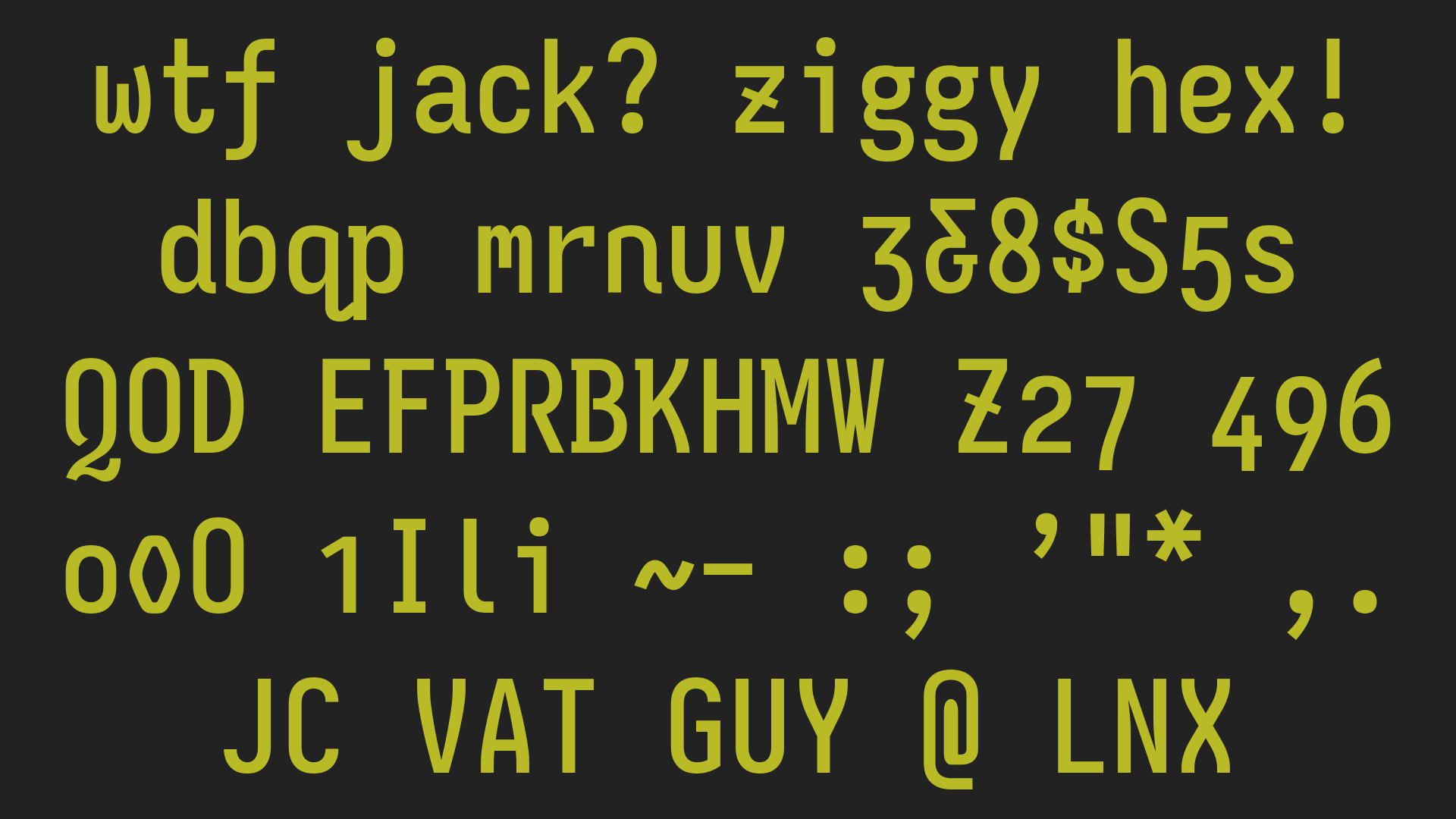
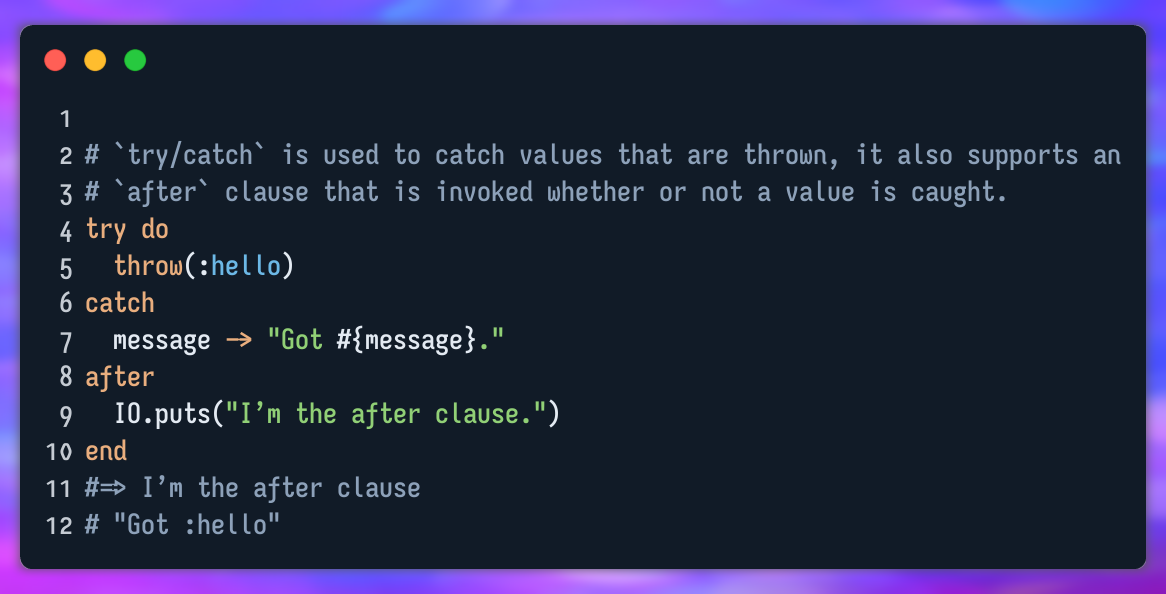
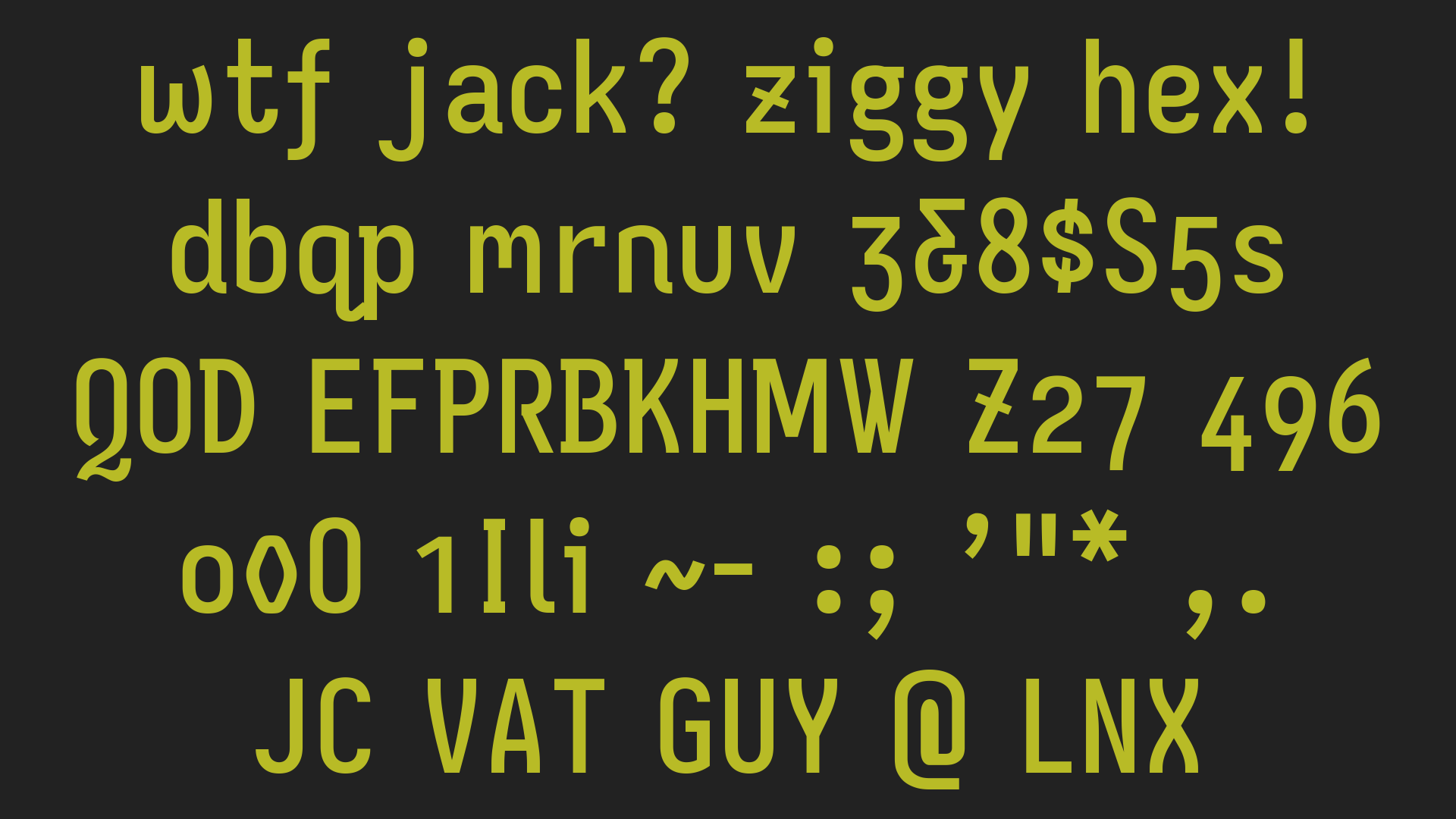
I'll add that https://github.com/0xType/0xProto is worth checking out, if you haven't. What mono (and proportional) fonts do you find work best for you?
* MonoLisa was pretty good, minus the cursive. As a late/16yo diagnosis under a British curriculum, I cannot express in words just how hostile cursive is. Its continued use in society is an embarrassment /rant
I made a custom build[1] of Iosevka[2] that chooses glyph variants based on Atkison Hyperlegible. I like it a lot and over time prefer it to the other Iosevka stylistic sets.
Since I discovered Iosevka a few years back it has been my daily driver for 80% of the time. I use other fonts from time to time but I always go back to my custom build of Iosevka.
Yours actually looks a bit more readable than mine, gonna check it out your build plan.
You might look into Mindbug[1]. It uses a few, very streamlined mechanics. It plays quickly - 3 life, 10 cards. But there is a ton of card variety, and wildly powerful cards, because the mindbug mechanic makes each game self-balancing to a degree.
I believe Garfield also gave creative input during development.
I made my best attempt at this. I made custom Iosevka[1] builds that use the letter shapes from this font. I call it Hypersevka, and the build plans are available at [2].
Iosevka is delightful once you get used to its density. I use a custom build of Iosevka with cues from Atkison Hyperlegible[1] that works really well even at tiny font sizes.
* UUIDv6 - sortable, with a layout matching UUIDv1 for backward compatibility, except the time chunks have been reordered so the uuid sorts chronologically
* UUIDv7 - sortable, based on nanoseconds since the Unix epoch. Simpler layout than UUIDv6 and more flexibility about the number of bits allocated to the time part versus sequence and randomness. The nice aspect here is the uuids sort chronologically even when created by systems using different numbers of time bits.
* UUIDv8 - more flexibility for layout. Should only be used if UUIDv6/7 aren't suitable. Which of course makes them specific to that one application which knows how to encode/decode them.
I see this pop up from time to time and it looks interesting. Does anyone know if there's actual progress on seeing this get adoption. I don't have any background on how to evaluate or how seriously to take such a draft.... is this draft under serious debate by those that could chose to adopt it or is it just written by someone with high hopes of throwing a draft out there and getting some attention for their idea?
I haven't verified myself, but [1] & comments assert that the client attempts to open a new lobby server connection periodically based on time or byte count, which causes your client to bump into the lobby server limit even mid-queue.


https://en.wikipedia.org/wiki/Dvorak_keyboard_layout#One-han...