that STMicroelectronics is 8.31cm by 9.92cm. That's _massive_ by digital sensor terms, but still pretty far off the 42cm by 29cm OP's effectively using.
there are lenses out there designed for apochromatic performance across the UV-Vis-IR band, but they tend to be really pricey.
The Coastal Optical 60mm is a frequently cited one. UV in particular is challenging, because glass that works well in the visible light range can be quite poorly translucent in UV. Quartz is better, but drives up the cost a lot, and comes with other tradeoffs.
>Whenever shooting a subject with a mixture of visible and infrared light, it becomes readily apparent that infrared light focuses differently from visible light. For many subjects, this can mean having to choose between crisp visible contours and an odd pink glow, or blurred edges with some unusual pink features inside. Some things never look sharp no matter where you move the focus.
The extent of this effect is very lens dependent. It also occurs in different colours of visible light too, depending on how well the lens design accounts for it. Optically, the term is "Chromatic Aberration" - lens designers try and account for it in the visible spectrum with optical design and lens coatings, and modern designs are generally extremely well corrected in the visible spectrum. _Usually_ designers aren't worried about the design correctly handing convergence into IR and UV, so how well designs focus them to the same point as the visible spectrum is hit or miss. There's specialist lenses out there that are designed specifically for wide spectrum apochromatism, but they tend to be special purpose and very expensive - especially if they handle UV.
The author mentions it at the bottom of the post as something they're interested in trying out, but I've found it very fun to play with dual bandpass filters - they pass a part of the Visible Spectrum + IR, which creates some interesting options in editing for visual display. There's an example in this set I shot with different filters - https://www.reddit.com/r/infraredphotography/comments/1dnki0...
> it becomes readily apparent that infrared light focuses differently from visible light.
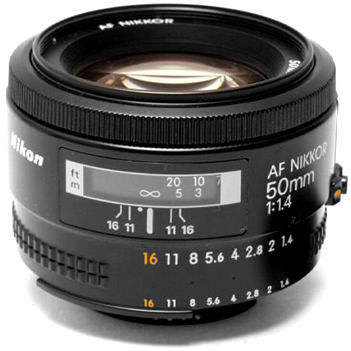
On old school manual focus capable lenses you'll note a small (often red when colors were used to indicate f stops) dot to the left of the focus indication line.
This was the offset for IR photography. You'd focus normally, and then make note of the focus distance and then line up the focus distance with the red dot for IR offset.
---
The UV photography often was done with other glass since the glass used by most lenses does an ok job of filtering UV light.
Superachromat is the term you're looking for in terms of lenses corrected throughout IR to UV.
They're not actually that expensive if you know where to look, I got my Zeiss 250mm supeachromat for about $500 from a Japanese seller. Works a treat for full spectrum film work especially on a system that lets you swap between film backs, if not for the woeful cost of film these days.
Author here. Great point about the lens-dependent abberation, I mentioned this briefly in my earlier write-up about doing the full spectrum mod [1] but forgot to mention it by name here. I've been trying to get by without spending a lot of money on lenses and have gotten a lot of mileage out of a cheap used 50mm lens that _feels_ like it's just one or two solid glass elements. Fortunately the old camera mount I'm using means all the lenses for it are used, old, and super cheap secondhand. I'm about to try my luck with a 300mm lens. IR should be fun but we'll see if I can squeeze any UV at all through that.
Beautiful shots you have with your own full spectrum camera. Originally I somewhat dismissed the Kolari IR Chrome filter because the suggested combination with a channel swap and custom LUT felt a little too heavily edited for me and I prefer to stay close to the dry camera signal. The shot with the Tiffen Deep Yellow filter is gorgeous, how does that one look on the camera LCD without the channel swap?
The IR Chrome does not need a channel swap, just setting the white balance in-camera is enough to get a usable image.
The deep yellow looks mostly like a purple and yellow mess straight out of camera. Intent is for the yellow filter to block blue light, and a UV cut filter, leaving the blue channel to have ~almost solely IR, then subtracting that from the other channels to leave you with "clean" Red, Green, and IR as your three channels you can swap around. Probably the least dry camera signal approach of the bunch, unfortunately.
The report linked in the article has BC support _massively_ in favour of "more light in the evenings" instead of "wake up when there is light", citing health and wellness concerns. "Better" seems a matter of opinion.
Little bit more specialized, but Lee Valley Tools [https://www.leevalley.com/en-ca] stores seem to still operate this way. Showroom (and a few computer kiosks) and order forms up front, then line up for them to pull the items from the back.
The Canadian Mint in Ottawa has a rather impressive large gold bar on display in the gift shop for people to lift and take photos with. It's not in a case or anything.
It's chained down with a Protec padlock - and there's a cop a few feet away to deal with you trying something un-subtle.
To me that sounds more like a good endorsement for having a guy legally authorized to use force against you standing guard. Any old padlock is probably safe when a uniformed agent of the state with weapons of varying lethality is standing next to it.
They do, but I've had severe quality/lifetime issues with them. Three Kensington trackballs, two different models, all three lasted under a year for me.
Strange. I have lots of Kensington Expert Mouse trackballs, some of which I have used for 7+ years, and none have ever given out on me. I have a stockpile of spares in case they stop making them, but they seem to be built very well.
Which models did you have problems with, and what went wrong?
Never tried the Expert Mouse in particular. Two of mine were slimblades, one orbit with scroll wheel. Different failures each time -
Orbit - broken plastic around one of the bearings. ball no longer turned smoothly or straight in every direction, and dragged.
Slimblade #1 - began to operate erratically. I believe it was a failure of some kind with one of the optical sensors, but I never was able to figure it out consistently.
Slimblade #2 - microswitch under the LMB failed mechanically, no longer triggered.
the slimblade's were provided by my employer at the time, the orbit was purchased personally for at home - it's use overlapped with the slimblades at work.
I don't think I'm super unusually hard on my trackballs - My Elecom Huge lasted for ~6 years before the soft touch plastic finally got a bit gross from skin oil contact, but still was functionally fine, and my current protoarc is going strong two years in.
Fundamentally, a limit on doing it at scale is that it for efficiency it requires the heat to be consumed near the production - and the bulk of large power intense data centres are not located in the midst of high density residential neighbourhoods with a demand for heat.
I grabbed an alphagrip from the ewaste bin at my local hackspace a few years ago. Gave it a solid week - which was enough for me to get at least marginally competent with the layout. I found it extremely awkward. I think the compact controller style forces your wrists into an awkward angle, so any advantages of minimizing fingers motion is compromised by the awkward neutral position.
Sloppy back switch mechanisms and a really bad trackball on top.
Too uncomfortable to use full time, to awkward to hunt and peck for an occasional couch/TV navigation keyboard - It went back in the ewaste bin.
I've been on a kinesis advantage 360 for a few years, after an ergodox and the older fixed size Advantages. Been eyeing the Svalboard, thanks for sharing your experiences!
Nice! I've never managed to try one myself, but I did assume something like that would be the case. To be fair to them, they never really promise hand ergonomics — just the freedom to type while in weird positions. I guess it's kind of the opposite of the Svalboard, in that way. If I had problems sitting in a conventional typing position, maybe that tradeoff would be worth it.
I love the Advantages and I really missed the bowling when I moved to the Ergodox — it remains my only real complaint with that keyboard family.
I've usually seen "thumb clusters" used for those style of key layouts, rather than thumb pads.
I've been using some variant of the Kinesis Advantage line for over 10 years - currently the Advantage360, their split board. I used an ergodox for a few years before that.
The Advantages are all 3d curved layouts with thumb clusters like the Maltron, and I haven't had RSI issues since making the move. The 360pro runs ZMK for firmware customization, and the stands do support different tenting angles.
Worth a try if you're looking for a more direct alternative to the Maltron.


.jpg)
reply