>That is at least what moral practice is like when viewed “from the inside.” By that I mean your moral phenomenology as an engaged participant. This perspective presents the appearance of at least a core of basic objective and universally valid or correct moral standards we are trying to understand and to live by (even as we recognize that we will at best do so imperfectly). This is why we’re prepared to argue, often passionately, in defense of basic moral claims about social justice, for example, in a way we don’t with mere matters of taste; and it’s why we feel compelled to modify our views when someone convinces us that we have a blind spot or other error in our moral outlook.
This is a very misguided view on morality. The author doesn't know what morality is, why it exists and what actually compels us to behave the way we do. Many people who are very intelligent fail to comprehend this.
Morality is biological in origin. You think and behave, debate and contemplate morality because you are evolutionarily predisposed to do so. Morality does not exist outside of this framework.
Morality is simply a set of rules that allow us to form stable societies and biology evolved you to behave within this rule set because if you didn't your society or you would be naturally selected out. That's it.
The problem is, most people don't realize this. When people think about fairness and morality they think they are deploying their logical and conscious mind to decide the meaning of right and wrong. Nothing is further from the truth, and this is 100 percent an illusion. When you are thinking about morality you are deploying the instinctual side of your brain, the same part that triggers hunger, sexual arousal or fear.
It sounds so absurd to say this but believe it or not it can actually be logically proven that this is what the human brain is doing. I can prove to you that your entire logical framework of morality is built off a biological predetermined moral instinct that is absurdly identical to everyone else's concept of morality.
The way this is done is that the moral module in your mind is imperfect. By identifying this imperfection I can illustrate to you that like how evolutionary programming doesn't always converge at the global optimum the same has happened in the moral module of your brain. Of all our brains.
Consider a baby drowning in a pool next to you. You are wearing fashionable clothes that costs thousands of dollars. By jumping in the pool to save the baby you permanently ruin your clothes. What would be the moral thing to do?
The moral thing to do is to save the baby. The life of the baby is more important the your clothes even if it's thousands of dollars. In fact our brains will be disgusted at the person who let's the baby drown just to save thousands of dollars. Essentially the moral precept here is saving a life is worth more than a couple thousand dollars so you should always do the former.
Here is where the flaw comes in. Leave the situation the same but change some of the superficial aesthetics. The baby is no longer drowning but is now a child in Africa who is starving. This child can be saved with a donation of thousands of dollars. Is it reprehensible that you don't save the baby? Most of us reading are aware that poverty exists in Africa and that donations can save them yet most of us haven't donated a dime.
Keep in mind the premise is identical. Save a baby in exchange for sacrificing thousands of dollars. What has changed? Why does the psychopath who refused to save the drowning baby is evil and why is the person who refused to donate money less evil when the basic moral premise is exactly the same?
The answer is easy to identify. Something has changed and that change influences the moral module of our brain in an illogical way that is unresolvable.
The change is superficial... basically the location and sensory stimulus is removed. By making the baby far away in Africa and removing visual stimulus, it is no longer triggering the moral instinct in your brain. Why does this fail to trigger it? Because there is no evolutionary advantage to societies who have morals that are concerned for entities that are far away and unrelated. Your morality is associated with visual stimulus and proximity but your brain does not incorporate these axioms into your reasoning because there was never any evolutionary pressure for your brain to evolve this way. That is the inconsistent flaw. Our moral modules are not designed to correctly apply moral reasoning to subjects outside of a certain physical proximity, so our brain triggers behavior that contradicts our own reasoning.
Thus our instincts do not trigger when a baby in Africa is dying of starvation, only when a baby next to you is dying from drowning. Of course there is a gradient. Starving babies in Africa triggers far less concern then drowning babies next to you even when the cost of saving those babies is completely identical.
If I presented to you these two scenarios separately and asked you to analyze the moral logic behind each, most people would derive separate and valid logic that would condemn the person who let the baby drown and vindicate the person who let the baby in Africa die.
By presenting both scenarios to you at the same time, however, the contradiction becomes apparent and your brain is now most likely trying to contemplate the moral logic and rules that will resolve the contradiction.
My point is to tell you that the resolution and everything your brain is doing to make sense of this moral contradiction is pointless. You are giving in to instinctual behavior. The moral contradiction exists regardless of what you do because morality is an imperfect biological phenomena. There isn't a universal explanation here. These are arbitrary rules applied to arbitrary events and you attempt to resolve it is just you giving in to your biological predisposition. Same as you giving in to eating when you are hungry.
There is no point in making sense of why rocks scattered on the ground is the way that it is any more then it makes sense to resolve this moral contradiction. Like the rocks, morality is simply an arbitrary set of rules... A biological phenemona unique to humanity and not a universal phenomena intrinsic to the universe.
Once you realize this, you will see that all this language, philosophy and structure built around morality is sort of pointless. It exists to help us survive there is no deeper meaning here and any search for something deeper will likely result in you making something up without realizing it (see religion).
I like your example and the fundament of your message that ethical decisions being made under the same meat brain machine, but I feel like you are conflating abstract reasoning about "morals" and intuitive empathizing with "moral" behaviour. To me they don't look the same.
I can say with absolute certainty that the lives of both children are morally equal, yet I can appreciate that one can not help equally in both cases. I would even agree that having a lower empathy for a child in Africa is evidence of how one is not a "moral" person, but that doesn't take away from the initial axiom: their lives have equal worth.
Apologies if my naive interpretation of your words and attempt at an explanation doesn't make the matters clearer. I think that looking into effective altruism might make more sense, the people behind it have a lengthier and better reasoned thesis.
> I can appreciate that one can not help equally in both cases.
You can help them equally that is my point. One requires you to ruin your clothes by jumping in water the other requires you spending a bit of effort locating a legit charity and sending a check. Make no mistake, your capability to donate to Africa vs. jumping into water is EXACTLY the same. That is my point.
The urgency is different, but that's an illusion. The effort and cost to save either child is exactly the same. Say your clothes is worth $20,000 and you only need to donate $5000 to save a child in Africa. Then even saving the child in Africa costs less.
This is the moral conflict. Logically you interpret the lives of both children as equal but behaviorally most people will likely only act to save the drowning baby. Even from a judgement perspective, without deep introspection people will be outraged at the person who watched the baby die and not be outraged at the millions of people who haven't donated a dime to Africa.
The judgement and behavior differs from the logic which says both lives are equal. That is the biological flaw. It basically shows that because our morality is flawed, it is then basically an arbitrary set of biological rules, not worth the time for deep analysis. This is entirely different from the fundamental laws of physics which is very much worth our time for deep analysis.
OK, apologies then. In my interpretation of what you said, I considered the second example as "a child in Africa, from a multitude of others in the same conditions". As such the choice to save one would leave behind others, making the end result a lot more diluted than in the first example. Probably a manifestation of something similar to the bystander's effect.
But in the end, I think that you didn't really address my assumption that you don't distinguish between "moral behaviour" and "theoretical moral concepts" as being different. In my mind, the later can be influenced as you said by various factors as geographical proximity, but the former can be treated as axioms of a hard science.
I am making the distinction. However what you choose as an axiom in your science of morality is still a choice. You have to take what your moral instincts tell you and encode that instinct into an axiom. I can frame what I said from that perspective to help you understand.
Consider the situation I talked about and the two possible moral axioms that arise from it.
The psychopath that sat and watched the baby drown. Should he deserve any form of punishment? What should we encode as an axiom from our instinctual response to this situation? Should we just let people who sit by the pool watching the baby die not be punished? Is that the right thing to do?
What about the people who didn't donate a dime to Africa? Should they be punished? This is basically most people in the US. Should we punish everyone in the US?
Axiomatically speaking if one is punished so should the other.
This is the axiomatic conundrum. We evolved moral emotions to determine our behavior. Even when we try to interprete these emotions from an axiomatic perspective the conondrums remain on which axioms to choose. Depending on the situation neither axiom completely fits our interpretation of what is right or wrong.
Some people resolve this by choosing not to punish anyone by basing their decision on the axiom that punishment should only be reserved for murder by action not murder by inaction. However that is just an axiom you arbitrarily chose. Emotionally speaking murder by deliberate inaction is something everyone feels is fundamentally wrong as well and can be shaped into an axiom. The problem is this axiom conflicts with our instincts that are telling us that the people who killed starving kids in Africa by refusing to donate money are not guilty of murder.
There are other moral situations that can hijack our brain. Consider a train that is about to run over and kill 5 people tied to the track. You can save those 5 people by pulling a switch causing the track branch to switch to another lane. This lane only has one person tied to the track. Do you pull the switch? Save 5 people or save 1 person? By default the train will run over 5 people.
Think about your decision before I adjust the parameters. Most people choose to save 5 people over saving 1 person and they will flip the switch.
Imagine the same train. The track is now linear with no branch. 5 people are tied to the track. You see a really big fat man standing next to the track. You can save all 5 people by sneakily pushing the fatman onto the track. The fatman will die but his weight will stop the train saving the 5 people. What do you do?
The situation is the same, only superficial parameters have changed.
Basically the situation is this: you have the choice of saving the lives of 5 people or 1 person. Axiomatically we by default think that you should save 5 people over 1 person.
However while both situations are the same we feel the the second situation tends to feel wrong. It feels like murder if you save 5 people. The axiom of murder by action and the axiom of saving 5 people over 1 person in this situation form a moral paradox and the feeling of what's wrong or what's right changes depending on if we push a person onto the tracks or if we flick a switch.
This indicates that when you try to encode our moral instincts into axioms they form inconsistencies. An inconsistent system means the system is arbitrary and made up. It is not a "science" and just an arbitrary set of inconsistent behavioral rules. In other words, it's just a biological group of behaviors that coincidentally helps humans survive in a society; it is not some universal truth in the universe, not like the laws of physics.
Is it worth studying an arbitrary set of rules as if they were some universal truth? No. I think it's excessive. You need to create laws so that society functions but any analysis deeper then that (like the philosophy of ethics for example) is a pointless endeavor. There is no axiomatic or fundamental truth here.
No, the viewpoint I present is the psychopathic viewpoint. An impassioned analysis disregarding responsibility completely as a non-issue. Not even trying to pass it off. Responsibility is not the domain of logic and science and this is the domain which I present my viewpoint from.
If you're older, like really old, you can actually remember a time where products were of a much much higher durability before the industry figured out that low durability products were more profitable.
So in actuality some of the suggestions on that site aren't necessarily overkill as industrial products aren't deliberately engineered to fail.
“Engineered to fail” and “planned obsolescence” are both pejorative rephrasings of “consumers prioritize price”
Engineering is an exercise in prioritization. If 90% of consumers buy the cheapest blender on the shelf, the blender made with the cheapest materials wins. Hobart still exists, and still makes good blenders. Consumers just started buying new designs that were more cost efficient.
If you look at the prices of mid twentieth century appliances in some old periodicals, and adjust for inflation, they’re about the price of commercial appliances today.
Before value-engineering, people didn’t have a kitchen full of appliances, they went without.
Value engineering is often criticized, but the plain truth is that it is primarily responsible for the high standards of living we enjoy today.
Something "engineered to fail" may be cheaper because materials that don't last so long are cheaper.
But it's also possible that the material isn't cheaper at all, but the manufaturer gains because if the part wears out sooner they can sell a replacement sooner. That isn't a case of "consumers prioritize price".
For instance, manufacturers have tried to sell printers which refuse to print when there is still quite a bit of ink left in the cartridge. Printers which refuse to let you use all the ink are engineered to fail, but they aren't cheaper than printers that do let you use all the ink. The manufacturer is relying on the fact that obtaining good information is costly; testing printers to rigorously prove this takes resources, and even when it gets discovered, many consumers won't know that the printer is doing this, so they won't use that information in comparing otherwise similar-looking printers.
The “razors and blades model” you’re referring to isn’t really the same thing as obsolescence. People know these items have consumables when they purchase them, and the original item doesn’t “break”, it just inherently requires another product.
The ink cartridge isn't actually consumed. The printer falsely reports that the cartridge is consumed so that the consumer has to purchase another one.
Does the following scenario often happen with value engineering or is it just my mind playing tricks on me?
A product category exists at around $450–500 and there are plenty of household who do without. It gets value engineered down to a $100 product and sees mass adoption. However, 90% of the market for the original $500 product also chooses the half-broken $100 version, leading to the $500 quality moving upmarket (such that it now costs $1000) or disappearing altogether (or moving to a commercial appliance that is unfit for household use).
I think that scenario may be why so many people have a hatred for value engineering: once cheaper becomes available, the market bifurcates into value-engineered wares for people who don’t care and the high-quality end becomes higher quality and three times the price it used to be. The choices of other customers deny you the continued availability of the optimal price+feature set for your needs & budget.
Yes, we hate value engineering because of this bifurcation (it's real, and I've been whining about it for a while too). But I see it somewhat differently than you described:
> value-engineered wares for people who don’t care
You say it like there is a choice involved here. There isn't. This is something that needs repeating - customers choose out of what's available on the market, not out of the space of all possible products. So all products that are hard to make and sell yourself are primarily vendor-driven.
If a market bifurcates like this, I can't announce my preference for the missing middle at all. The split may have happened against my preferences, or it may have happened before I cared, or it may have happened before I was even in the market for that product category. But once it happened, people who'd prefer something better than barely-fit-for-purpose can't get it.
> high-quality end becomes higher quality and three times the price it used to be
If it becomes higher quality. As you mentioned higher up, it frequently becomes different, as it's no longer targeting a large audience.
> The choices of other customers deny you the continued availability
Yes, but again, what choices? These things stick in a feedback loop, a self-fulfilling prophecy. And it doesn't take people choosing the lower-tier option. It takes a company choosing a somewhat lower quality this year than they did the last year, because if done gradually people won't be able to quickly tell (the very job of marketing is to confuse customers about this).
I hate "revealed preferences", I consider them mostly bullshit given the lack of actual choice - but if we want to frame the situation like this: the bifurcation doesn't require that most of the middle-tier consumers "actually prefer" the cheaper option over the middle one. A company will attempt this even if it meant losing middle-tier customers altogether, as long as they believe the expanding lower-tier customer base will make up for it.
What's even more maddening is the interplay with economies of scale - the middle-tier product could've gotten better and cheaper over time, if its broad customer base wasn't stolen by the low-quality option. So the households that couldn't afford the quality option yesterday, would be able to afford it tomorrow - and today would be making use of used ones, because there is such a thing as a market for used goods, which works best when items are durable. But companies often do try to sabotage it, too.
Also: the downwards quality spiral doesn't stop at a reasonable point, it stops at the lowest point where the customers can be duped en-masse, unless stopped by regulatory means either. I'll happily argue that, for most products, the lowest-priced options shouldn't exist in the first place, because they deliver negative value (after accounting for total use costs, with possible future replacement, which most people don't) and endless frustration. I see them as an environmental disaster.
If the missing-middle is, in fact, a real consumer desire, then you’re identified a market failure that might be a good startup idea.
And I’m not saying this sarcastically, many wildly successful businesses have been built on finding untapped markets that established players have missed. There is always room for improvement. The question is whether that improvement is strong enough to change people’s buying decisions.
Even if the missing middle is a real consumer demand, it may not be enough of a real demand to achieve the economics of scale to be profitable (or it is profitable but with 15% margin instead of 30% and the bean counters can’t stand that).
The ironic part of that is that often people will end up spending more on crappy stuff, as they end up buying several {thing} over the time period one more expensive one would have lasted. This is also an example of why it's expensive to be poor.
I did this with office chairs. I was buying a new mediocre chair every few years before finally buying a Herman Miller several years ago. It was expensive compared to anything else I'd owned, but (1) it's an order-of-magnitude better chair, and (2) I had probably spent about the same money on several crappier chairs over the prior decade. I am still sitting in this chair now, and it's still just as good as the day I bought it.
If you’re often using a computer chair (as many of us do use in a commercial setting), you probably legitimately need a chair with a high duty cycle.
Meanwhile, I have a $7 toaster that’s 10 years old. I don’t make toast very often. Even if my toaster fails today, a low-end commercial toaster wouldn’t pay itself off over my lifetime.
Poor people also have alternatives. Much of the world doesn’t worry about the repair bills for their clothes dryer or their dishwasher, because they hang their clothes on a line and wash their dishes in a basin.
> “Engineered to fail” and “planned obsolescence” are both pejorative rephrasings of “consumers prioritize price”
No. Of course, a part of potential lifetime loss is due to price. Manufacturing a case in plastic instead of carbon fiber is simply far cheaper and most consumer will go for that. However, we see cheaped out components even in high-priced or prosumer gear, while the existence of this market already pretty much proves that price is not everything to every consumer. Additionally, there are many examples of behaviors that save no money or are actually more expensive, but help the bottom line by forcing people to buy new (see the Phoebus cartell [0] or the slowing down of older iPhones by Apple).
Yes, true planned obsolescence has happened. But it’s a lot less common than people think, and often prohibited by law.
Even the “slowing down of old iPhones” is an example of that. This was a bug fix for crashing due to current demand that exceeded the battery’s capability.
Most people aren't even aware of planned obsolescence. There's also very little data on how much of this actually happening as no company will admit to this practice. So really no one can make a statement on whether it's common or uncommon without a big data gathering effort.
The statement we can make that is very realistic is that companies are incentivised to do do "planned obsolescence" and because of this "planned obsolescence" has happened, is happening and will continue to happen in the future.
Value engineering is not a idea known only to kitchen appliances engineers. This was just the example at hand.
Many of the products and services that people buy to support their health, education, security, etc have been made more accessible by value engineering either directly, or in their supply chain.
Sure, but when is having lots of cheap stuff related to standard of living? I still maintain that access to healthy food, good education, healthcare and security are what determines standard of living, not the amount of stuff you have.
The human activities that enable someone to have access to healthy food, good education, healthcare and security make use of value-engineered products.
Really? It’s definitely not true for education, good education is essentially completely independent of technology, and it seems to me that healthy food at reasonable prices is more a question of mechanized agriculture and supply chains.
Healthcare, maybe I can see it, but not really. The proliferation of single use stuff in hospitals for example seems like a different thing than cheap bicycles and shoddy clothes that last a single season.
Maybe I misunderstood what value engineering is, but I don’t really see how the philosophy behind cheap consumer goods is very related to those things.
> good education is essentially completely independent of technology
It can be, to a point, but most developed societies have schooling systems that use various types of supplies and equipment in the course of education. More affordable transportation, facilities, supplies, and equipment is generally good for students.
> Healthcare, maybe I can see it, but not really. The proliferation of single use stuff in hospitals for example seems like a different thing than cheap bicycles and shoddy clothes that last a single season.
Well, yes, those are very different things. But, cheap disposable medical supplies both lower barriers to access those things. Not only does this mean that someone who is low-income might be able to more easily access something like, say, an oral thermometer ... but it also means that things like equipment with a high infection risk can be disposed of instead of reused. Many hospitals, for instance, have started switching to disposable surgical tools, because that's now a possibility, and it decreases infection risk.
The bottom line is, cheap stuff enables more people to have more tools at hand to solve problems.
There's no doubt "value engineering" occurs. Your claim is that early obsolescence is not planned but rather a side effect of value engineering.
There's nothing in the universe that stops a feature that meets a design goal of lowering value from also meeting the design goal of planned obsolescence. So it's 100 percent possible that a company still has two design goals: making a cheaper product and obsolescescing that product.
So if you claim that it's basically not happening. Tell me in what way is a company not incentivised to plan the early obsolescence of a product and what evidence do you have that this is basically not happening as a deliberate design decision?
Your evidence is only an example that a company can both meet the goal of obsolescence and lower value with a singular feature of cheaper materials. I have stated that this is not evidence because a company can still have the design goal of obsolescence while meeting that goal with a singular design feature intended to make the product cheaper as well. You need to counter this reasoning because it invalidated your evidence.
The phrase "planned obsolescence" implies and is a claim of intent. The obsolescence wasn't "planned" if it was simply a side-effect of value engineering... it was simply consequential. There are some proven instances of obsolescence being planned, but this is by far an exception, not the norm.
The broad root claim above that "Consumer grade products are deliberately designed to fail." is the assertion with insufficient evidence. The video attached to that claim has a few valid examples, but a few examples over the past century is not indicative of the current state of the entire manufacturing industry... especially when there is a textbook engineering practice that does explain the same.
> The phrase "planned obsolescence" implies and is a claim of intent. The obsolescence wasn't "planned" if it was simply a side-effect of value engineering... it was simply consequential. There are some proven instances of obsolescence being planned, but this is by far an exception, not the norm.
You are missing the point. I am claiming that ONE feature can be built to meet TWO objectives. One for value engineering and the other for planned obsolescence. That would make NEITHER of the two objectives a side effect.
Example: Airplanes are painted with colored paint both to prevent the metal from degrading AND to give the plane a better aesthetic. ONE feature meeting TWO objectives.
>The broad root claim above that "Consumer grade products are deliberately designed to fail." is the assertion with insufficient evidence. The video attached to that claim has a few valid examples, but a few examples over the past century is not indicative of the current state of the entire manufacturing industry... especially when there is a textbook engineering practice that does explain the same.
My broad root claim is that the practice has happened, is happening and will happen.
My evidence for this is examples of this actually occurring. And real incentives for this practice to exist.
I made no claim about how widespread the practice is. That is more your claim. Your claim is basically saying that the amount of entities practicing planned obsolescence is so minuscule that it's basically negligible.
Your evidence for your claim is that value engineering exists in a text book. That's it. You know what else exists in certain text books? How crypto works. Does that make crypto frauds and scams negligible? No.
No doubt your claim is hard to prove, the burden of proof for you is astronomically harder than it is for my point. But then think about it... why do you hold strong opinions and stances on topics that are almost impossible to prove?
the shop vac pro i bought had a one-time current fuse soldered down (not replacable with a holder). over time all of these machines get a little friction in the fan assembly and blow this fuse.
yes, you could argue that making this fuse replaceable would add $0.05, but we all know that its not because 99% of the purchasers wont crack it open, figure out whats going on, and short the fuse.
you can argue that by keeping the volume up shop vac can lower prices. but i dont think you can argue that efficiency has been gained.
The 1% of people who try to fix their shop vac are probably the same 1% who are comfortable using a soldering iron. Reducing part count is value engineering 101.
The number of consumers who buy a shop vac based on whether it has a socketed fuse is negligible. It’s simply a feature with zero commercial value. It’s all cost with zero benefit.
Only because a good chunk of the true costs are externalized. If the vendor would have to pay for disposal of their product, suddenly that socketed fuse would become a cost-cutting measure.
For one item maybe, but every item on a BOM for a mass manufactured product is (hopefully) multiplied by many thousands or millions of units.
If these types of features mattered to consumers, then one would expect we’d see success from the companies who prioritize it. These companies and products do exist, but they are niche.
What consumer wouldn't want a vac that can be fixed easily by putting a new fuse in a socket? The issue is the consumer doesn't know about this possible fix. The Company Engineers this fact into the product AND into the marketing and into the warranty length. Common sense. A human is irrational and lacks knowledge, but a human made aware of his irrationality will usually choose the rational choice.
Companies are just taking advantage of a consumers lack of knowledge, awareness, and intelligence. If you were perfectly aware of two competing vacs and all the actual technical specifications of course the one with a replaceable fuse would be counted as a positive feature.
The problem is that companies that try to market the fuse as a feature will have a hard time communicating this fact to the consumer especially. Thus it is in the interest of every company to engineer shorter lifespans into their products as consumers can't see past 2 years at the point of sale.
Industrial products on the other hand are usually massed purchased and reliability is measured from an accounting perspective. This makes industrial owners more knowledgeable and able to make more rational choices as they have quantitative metrics that effect their profits during accounting time.
If that fuse blows, does swapping it help? Wouldn't the blown fuse typically mean the fan bearings are broken and a new fuse would just blow soon again?
So, the end result of having a soldered fuse was exactly the same as a socketed one: it was successfully repaired. I don’t see the justification for the extra BOM item.
For the 99% of people who don’t attempt electrical repairs on their vacuums, that fuse socket would be sitting inside of a vacuum in a landfill.
Drive around any US suburb on trash night and pick up a couple of appliances. Most of them either still work 100% or have trivially fixable issues. People (US consumers especially) don’t fix stuff.
Don’t get me wrong, I love fixing things myself. I’ve probably saved $10,000 over the past 5 years by fixing things people were throwing away instead of buying. The ease with which this is possible to do demonstrates how few people attempt repairs themselves.
>So, the end result of having a soldered fuse was exactly the same as a socketed one: it was successfully repaired. I don’t see the justification for the extra BOM item.
You joking? You realize houses and cars have socketed fuses that can be replaced almost turnkey. This is a simple solution to build into the product a UI that let's the user know a socket was blown and allow the user to replace a fuse like replacing a AA battery. FUSES are designed to fail and be replaced. Making those FUSES inaccessible is ALSO a design choice because it's contradictory.
There was a point in time where every phone had a replaceable battery. You think that replaceable batteries disappeared because companies wanted to save costs? Sockets for batteries have been part of the design philosophy for consumer products for decades, the fact that these sockets are removed from phones is not a cost saving measure.
My above point is was that cost is an example of an engineering tradeoff, not that it is the only engineering tradeoff.
Phone batteries are designed to be replaceable. They’re internal because of design considerations, not cost. In fact, nearly all cell phone batteries are secured with removable adhesive because they’re specifically intended to be replaceable.
Homes have circuit breakers (fuses haven’t been mainstream for a while) because the load is not predefined, and can be occasionally exceeded by the end user. This is not the case for a consumer appliance with a known load. An unexpectedly high load is an indication that another component has also failed. There’s some diagnosis that should be done when replacing a fuse on a system with an unexplained over current situation.
Your logic doesn't make sense for why socketed fuses even exist. So why do cars have socketed fuses then? Do cars have unexpected loads? Not nearly as much as houses. Cars have socketed fuses same as houses because fuses are designed to fail and be replaced. This is the logical intention of fuses.
Making something that is designed to fail and be replaced (fuses) inaccessible is a contradictory design philosophy... Unless this design philosophy is INTENDED to make the product fail. You place a component designed to fail inside a vac and make it inaccessible then that means you are designing the vac to fail.
Phone batteries are not designed to be replaceable this is a lie or pure stupidity. You realize that glue or adhesive is not designed to be removed right? It's designed to be permanent. Screws and socketed components are designed to be removed.
Additionally the iPhone isn't even designed to be opened. It's extremely hard to open that device and it's completely obvious the reason is because that device is designed to both fail in a certain time frame and only be serviceable by apple technicians. Here's how easy it is to "replace" a battery you claim was glued into the phone as a design decision to be "replaceable": https://youtu.be/gkCyl7kRGns
>My above point is was that cost is an example of an engineering tradeoff, not that it is the only engineering tradeoff
Who in the universe isn't aware that tradeoffs outside of cost don't exist? Kind of useless if the point is to obvious. How about you address my point in the fact that deliberate decisions were made to make products fail and that these failures are not design tradeoffs.
A thinner phone for an irreplaceable battery in the iPhone is not actually a tradeoff. In fact if you look inside the phone they very much could've screwed the battery in without increasing the thickness of the phone.
You realize that Steve Jobs once said the iPod was designed to only last a year?
> Your logic doesn't make sense for why socketed fuses even exist. So why do cars have socketed fuses then?
1. Cars cost 600x what a shop vac does, so more people attempt to fix them.
2. Some fuses in cars are, in fact, not socketed. Particularly for the higher-current and more dangerous circuits where unexpected overloads are of a greater safety concern and are less likely to be due to fluke events. For instance, fusible links[0]. It would certainly be possible for automotive designers to design a socketed fuse in place of a fusible link, but the cost to do it would be 'high' relative to the frequency of failure, the risk, and the likelihood of user-serviceability. Again, an engineering trade-off.
Yes, every car I've ever been in has accessory circuits that a user could easily overload. And I have done so myself many times. Also, there are a lot of electrical parts on a vehicle with limited lifetime that are prone to mechanical failure: relays, bulbs, accessory actuators, etc. When these items fail, they can stall/short and cause an overcurrent condition.
You wouldn't throw away a $30k car because a bent pin on a $1 tail light bulb shorted out. You'd replace the $0.10 fuse and get another $1 tail light bulb. But, you'd probably throw away a $25 blender when the $18 motor laminations short out, because the failure would cost more to fix than the entire product is worth, especially if you're paying labor to fix it.
Fuses exist to fail when some other failure condition happens. Many failures on a car are economical to fix. A blender is totaled if nearly anything happens to it.
> Phone batteries are not designed to be replaceable this is a lie or pure stupidity. You realize that glue or adhesive is not designed to be removed right?
Mainstream phones (iPhone, Samsung, etc) are typically designed with adhesive that has removal tabs which deactivate the adhesive and allow someone to remove it cleanly. They could simply leave this feature out if they didn't want it to be replaceable, but they didn't. Their intentional adding of this feature is evidence that they do intend for the battery to be replaced. Example: https://guide-images.cdn.ifixit.com/igi/yAxAcOuZkVKD1xAY.hug...
> Additionally the iPhone isn't even designed to be opened. It's extremely hard to open that device and it's completely obvious the reason is because that device is designed to both fail in a certain time frame and only be serviceable by apple technicians.
It's hard to open as a result of the design/engineering trade off. Just because it's hard to open doesn't automatically imply that someone must have plotted to make it hard to open. It just means that end-user serviceability wasn't a high-priority design feature. It's hard to open simply because glue is a cheap way to make something thin, waterproof, and cheap to manufacture. If Apple really wanted to waterproof their device while intentionally make it unserviceable, the electronics industry has way better ways to do that: https://en.wikipedia.org/wiki/Potting_(electronics)
> Who in the universe isn't aware that tradeoffs outside of cost don't exist? Kind of useless if the point is to obvious. How about you address my point in the fact that deliberate decisions were made to make products fail and that these failures are not design tradeoffs.
Your point is valid for instances of proven malice, but one should not assume malice where a valid alternative explanation exists.
1. People would like to fix vacs too. Cheaper doesn't mean everybody just replaces a vac every year.
2. Fusible links are designed that way for safety. The hood of a car is designed to be opened so that even a fusible link can be fixed.
3. When I asked: Do care have unexpected loads? I answered that question right after I asked it. The question was rhetorical.
I'd rather replace a fuse in a 25$ blender then buy a new one. But either way, you wouldn't throw away a $100 dollar vac or a $500 dollar iPhone just because a $0.10 fuse shorted out.
>Mainstream phones (iPhone, Samsung, etc) are typically designed with adhesive that has removal tabs which deactivate the adhesive and allow someone to remove it cleanly.
True. BUT these batteries are still extremely hard to remove as they are locked into the case. They were designed to be hard to remove so that apple service people can repair the few phones that statistically beat the warranty.
We both know that the iphone is basically designed with a battery that is so hard to remove that it can be basically classified as not removable by the average layman. Very different from the way all phones use to have removable batteries.
>It's hard to open as a result of the design/engineering trade off. Just because it's hard to open doesn't automatically imply that someone must have plotted to make it hard to open. It just means that end-user serviceability wasn't a high-priority design feature.
That's my point. How do you know it's a tradeoff? How do you know it's not a design decision? Basically Apple is incentivized to make the phone hard to open. Additionally all apple policies of "repairing" a phone basically make "repairing" the phone cost as much as buying a new one. With every policy surrounding the phone is positioned, it's more than likely that the decisions are deliberate.
>Your point is valid for instances of proven malice, but one should not assume malice where a valid alternative explanation exists.
My point is valid for instances of suspected malice. The motive exists. Do you trust someone trying to sell you a new crypto just because there's no evidence of malice and that an alternative explanation exists? No. It's stupid to believe there is no malice.
It is far wiser to assume malice exists wherever profitable incentive exists, such is the nature of business.
eh. even if it takes you a few seconds to wonder why its not spinning up they usually dont burn out right away. and if they do there is a little puff of smoke, nary even a pop.
Did you watch the video? It's not just about cheap materials. It's literal design decisions made for the express reason so that the product will fail.
The iphone not having a replaceable battery is a design decision, it doesn't make the phone cheaper.
You are taking two independent phenomenons and trying to group them together as if they are the same phenomenon. Yes making a product cheaper has the side effect of reducing its' lifetime but the video and what I'm talking about is DIRECT engineering decisions for the purpose of shortening lifetimes NOT making things cheaper.
I did watch it. (And I have watched it once before years ago.) Design is also an engineering constraint. All of these constraints are interconnected. None are wholly independent.
The “fashion” argument is particularly silly. Fashion and style are concepts that have existed as a part of human nature longer than manufacturing, corporations, or even money itself have even existed.
Having the latest flashy accessories to show off to potential mates is something that was literally invented (at least) 75,000 years ago by Neanderthals, not GM or Apple.
> Design is also an engineering constraint. All of these constraints are interconnected. None are wholly independent.
Did I say they weren't interdependent? My response to you LITERALLY stated an interdependency.
Also when does "design" being an engineering constraint have to do with anything? Are you talking about aesthetic design choices made by an artist/product designer that an engineer has to take into account? You should be more specific because engineers "design" solutions around constraints as well, and the statement makes no sense when viewed from the engineering perspective.
>The “fashion” argument is particularly silly. Fashion and style are concepts that have existed as a part of human nature longer than manufacturing, corporations, or even money itself have even existed.
What fashion argument? You say the "fashion" argument is "silly" but I'm over here thinking, what "fashion" argument? I NEVER made such an argument. What's silly here is that you're talking about some weird imaginary tangent that I never even touched upon.
If you actually did watch that video or even read my posts I'm thinking you read it really quickly and you skimmed that video. I think you skipped some words and sentences and made a huge assumptions about what I'm talking about.
>
The part of my response that you didn't even address is that I'm saying FAILURE is engineered into the design DELIBERATELY. It's not a side effect of creating a cheaper product. It's a actual design choice making the consumer more likely to buy a new product.
You realize that the filament for those bulbs weren't picked because the filament was cheaper. A deliberate R&D effort was created to pick filaments that were roughly the same cost but failed quicker. That's counter to your entire argument. R&D costs money so costs are actually INCREASED to make the product fail quicker.
> Did I say they weren't interdependent? My response to you LITERALLY stated an interdependency.
I am referring to:
>> The iphone not having a replaceable battery is a design decision, it doesn't make the phone cheaper.
>> You are taking two independent phenomenons and trying to group them together as if they are the same phenomenon.
>What fashion argument?
14:25 in the video. :D
> The part of my response that you didn't even address is that I'm saying FAILURE is engineered into the design DELIBERATELY. It's not a side effect of creating a cheaper product.
Yes, there are examples of this deliberately happening. However, there are reasons why it happens as a side-effect of the engineering process, and this is an exponentially more common scenario (because it is common engineering process!).
I've learned through experience that people like kube-system are blinkered in this context [1], and best routed around. This is usually by conscious but not obtusely malicious choice. The shrugged-shoulders, learned-helplessness, "of course it's that way, what can anyone do about it" choice. This is the mass-market default, I wouldn't get too worked up over it; you won't convince them of a position until it benefits their personal scope of attention. You don't need kube-system's consent for change, they'll go along with pretty much any status quo, go ahead and find the levers of change you want to see created and yank them.
An aspect of planned obsolescence I don't see discussed much is the built-in incentives for factories (giant sinks of capex) and how we conceive manufacturing in general to lead the cart before the horse in our current dominant economic paradigm. They and their logistical tail including the staff are so expensive to re-tool and re-skill that it leads to many perverse incentives. There are vanishingly few US anvil and vise factories left because they made such a good product up to and into the 20th century that when industrialization's per capita saturation curve inevitably flattened, their market nosedived as their products were literally outliving their initial customer base. Entire manufacturing ecosystems are built around trying to avoid that outcome, and it is nearly impossible to a priori tell whether an industry in a nation is hidebound avoiding necessary technological change or undergoing another anvil and vise experience.
I have some hope in automation and cell-based flexible manufacturing though I strongly suspect the economic case for both is not nearly as straightforward as the narrative exposed to laypeople like us makes it out to be. I think we're missing quite a few pieces of the puzzle (design-to-floor-changes automation being one example) before we can tell the story that the flexible industry/factory narrative would like to tell.
[1] I'm carefully trying NOT to slight kube-system here. There is only so much attention any one individual can apply to any given context. The situation could easily be reversed between kube-system and you in a different context. We need cognitive density in all the wide-ranging human endeavors our species engages in, there is room enough for everyone.
>I'm carefully trying NOT to slight kube-system here. There is only so much attention any one individual can apply to any given context. The situation could easily be reversed between kube-system and you in a different context. We need cognitive density in all the wide-ranging human endeavors our species engages in, there is room enough for everyone.
In the arena of the internet I wouldn't worry too much about slighting people. It's all fair game, they can "slight" you too. This necessity to be overly polite over moderately polite so you can avoid hurting someones precious feelings is overblown on the internet. First of all the feeling will pass, second of all it's the internet, you're anonymous so the chances of permanent damage is basically zero.
Worrying about slighting someone hinders you from getting your point across, it also stops the other party from emotionally engaging with you. Conflict often fuels the fire of a debate giving the opponent incentive to try to expose every single logical flaw in your argument.
The internet is the perfect arena for this kind of heated discussion. It also goes both ways. If I have a wrong idea that I think is right, by god I will fight for that idea to be right until all possible logical alternatives are decimated and even then I'll only admit that I'm wrong 5 years later. Still my efforts allowed the other party to strengthen their arguments and expose flaws in my arguments and the discussion is open to public record. Even more important my attempts at vindicating myself could actually expose a real flaw in other parties argument, thereby maintaining a healthy dose of scientific doubt.
My philosophy is don't try to deny your own human bias. Be aware of it, and revel in it. You and others were naturally selected to have this bias because it helped you survive. Trying to deny it and be above this base emotion could hinder your competitiveness in the game of life.
>I did watch it. (And I have watched it once before years ago.)
This is a total and deliberate lie. The video came out march 2021. There is no way you watched this years ago. You didn't watch it at all. I recommend you actually watch it.
It's technically not even a science. It's in the realm of logic and maths. After all we don't call algebra a science, why does computing all of sudden need the word?
So to some it all up: computer science is neither about computers nor is it a science.
It's true that for some time now "science" has been used almost exclusively for disciplines that make use of experimental methodologies, but in earlier usage it just meant roughly
"the process of creating knowledge." The German "Wissenschaft" (which is normally how "science" is translated) is closer to the older meaning (though I'm not fluent in German, so I'm just going off what I've been told).
Well I'm not sure when the common usage of "science" changed, but it's possible that when "computer science" was coined in the 1950s [1], the older usage was still at least widely understood. Perhaps given the present day importance of the discipline that's stuck with an outdated name, we can return the the older usage which is IMO better.
I'm curious how did mathematics miss out on the word "science." The meaning of the word "scientist" is consistent with how it's not ascribed to a mathematician as mathematicians don't do anything related to the scientific method.
The thing is you stated that around this time the term "science" was more broad and just meant acquiring knowledge... how come "science" wasn't applied to mathematicians? Technically, according to what you stated, the definition was broad enough to apply to mathematicians.
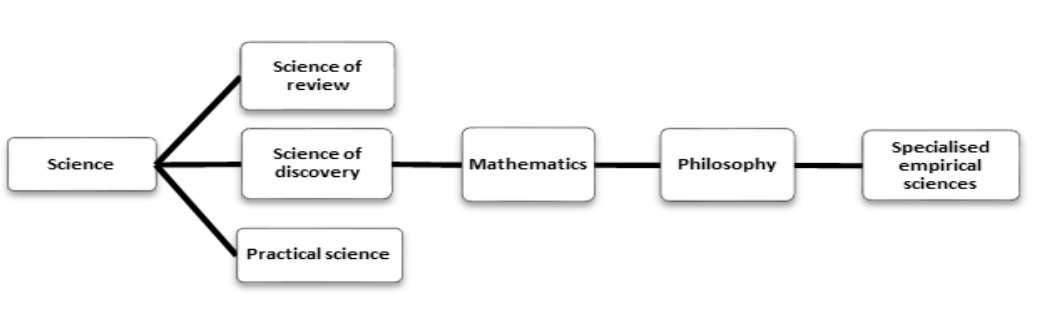
Logic, Ethics, and Aesthetics are the three normative sciences. Mathematics falls comfortably within the domain of logic, and thus mathematics is a scientific enterprise. Computing science is the subset of the subset that deals with getting actual computable results.
The reason is because this definition mentions the notion of preferred outcome. Logic and Math and computer science do not deal with "preferred outcomes" these fields are all just axioms and the consequences resulting from said axioms preferred or not.
Pedantry aside, nobody considers a "mathematician" to be a "scientist" when using the terms as they are commonly used in English. This is a total inconsistency.
I’m using Peirce’s definition of the normative sciences[1]. As is not uncommon in English, the same words or phrases can denote different concepts and the wiki link you shared is a case in point.
Philosophy is under mathematics which is not under logic? Philosophy is like literature it is entirely a separate category and logic isn't even mentioned in his arbitrary grouping.
I suppose if we call it computer science, then perhaps all the other forms of science should really be called "reverse engineering" (especially biology.)
Biology is consistent with science in the sense that there exists people called scientists in biology that do experiments utilizing the scientific method.
In math everything is purely theoretical conjecture. No hypothesizes, no testing, no observation, just derivations of theorems from axioms. Same with "Computer Science" it's all logic games.
That's why mathematicians are not known as scientists. For computing, I believe the term "computer science" was likely mistakenly coined by someone who didn't know the full extent of the word "science."
> Same with "Computer Science" it's all logic games.
Unlike math, it's domain related applications though. What are databases, codecs, regexes or neural nets - abstractions or concrete tools for specific uses? It's not all platonic.
Domain related applications aren't what's studied by "Computer Scientists." You will note that most people who do "domain related" applications call them selves Software developers, Software engineers, etc. etc.
If someone finds themselves calling themselves "Computer scientist" they are indeed usually exclusively studying the logic game.
Have you guys ever wondered that if the core fundamental definition of life just starts off as some molecule that self replicates. And that the resulting complexity of life is just errors that happen during replication that are naturally selected to reverse entropy, then could there be other forms of life that are not based on water or carbon?
I get that the carbon atom and water facilitates organic chemistry which results in tons and tons of complicated permutations and configurations of molecules necessary for life but are there other atoms in other conditions that allow permutations that that are equal in complexity? Could some form of life be non-carbon based life be able to exist say in the middle of the sun?
I heard deep in Jupiter's atmosphere is a sea of liquid metal hydrogen. Could a different form of life exist as non-organic chemistry with high pressure liquid hydrogen as an integral part of the self replicating machinery?
Any experts on bio molecular stuff care to weigh in? I'm positive this stuff has been speculated on, but I've also heard that a lot of experts don't consider non-carbon based life without water to be viable or likely simply because organic chemistry facilitates so many complex chemical permutations necessary for life.
There are chances that it is possible to have some slower form of life at much lower temperatures than on Earth, where the elements H, C, N, O and S still have the major contribution but instead of water some other solvent is used, e.g. hydrocarbons or ammonia.
On the other hand, at very high temperatures, e.g. in the Sun, life is certainly impossible because you cannot have even molecules, much less more complex structures. Everything is a homogeneous mixture of atoms, ions and electrons and any kind of structure would be broken instantly by the agitation of the particles.
If there is any metallic hydrogen on Jupiter, it can be found nowhere close to the atmosphere, but in the core of the planet, at extreme pressures.
The lower temperature chemistries listed above may exist on planets far from the stars.
However the high-temperature chemistries based on fluorine do not have any chances to be found in the nature.
Fluorine is much less abundant than the major bioelements and it is extremely reactive, so whatever fluorine exists, especially at high temperatures, will be combined with the abundant electropositive metals, i.e. mainly with calcium, but also with sodium or aluminum, forming inert minerals, like apatite, criolite, micas etc., not organic molecules or fluoro-silicones.
Personally, I view life as just a self-catalyzing reaction. There seems to be few if any hard rules for life because we seem to always find exceptions. The amount of chemical reactions available is near endless and combined with the sheer number of environments within the universe and there is bound to be other self-catalyzing reactions that could potentially turn into life. There are many reactions that we have no idea even exist because it requires slightly higher or lower pressure or unique atmospheres or environmental conditions that aren't common on Earth, but are common throughout the wider universe.
What is a "self-catalyzing reaction"? Would nuclear fission or fusion count? What about reactions involving free radicals, where the catalyst is a reaction product?
Is the "self-catalyzing reaction" sufficient on its own to classify something as life?
>We do not go feral because from a young age we are socialized in our ethnic and religious communities, have a firm family structure with roles, duties, and authority, and we have purpose. We are socialized to feel shame if we express anger outside of its proper context, and can face social repercussions such as ostracisation, ritual shaming, and even exile. We may call this chivalry, futuwwa, javanmardi, or civility. The last of those terms is important as a general catch-all phrase for how to conduct oneself in any given society.
The man talks about inconvenient truths but I feel he deflects the issue with another inconvenient truth and no data to back it up.
The fact of the matter is, there is correlative data that can associate certain quantitative metrics with people who go "feral." Sure family structures could contribute to this but really what's going on is socioeconomic.
The likelihood of a man going feral is directly tied to his socioeconomic level in society relative to others. Data consistently shows this. It makes sense why men are biologically wired this way. You have less to lose as someone who's low on the social ladder so risky and "feral" behavior makes more sense from a cost benefit analysis. Think about it, a man is dirt poor and is therefore already ostracized because he is poor, so what does he have to lose in engaging in risky behavior where the loss is only ostracisation?
The rising trend we see in the world today is directly tied to wealth inequality. It is an economic problem and one of the downfalls of capitalism (a system where there currently is no clear alternative). Family support structures is just a related side effect, but I doubt it has as much causative influence as the author thinks. There are plenty of rich people who come from broken families who do not act feral. If this was simply a family problem you'd see feral people across the economic spectrum.
As wealth inequality rises you will see more and more people become feral until "feral" becomes "normal." It won't necessarily become mad max as long as people who have access to plentiful resources are able to maintain order and control.
As long as there are limited resources and those limited resources are distributed unevenly this problem will always exist.
Men are not stupid. People know what constitutes civilized behavior and what doesn't, don't presume that a lack of family structure makes a man so stupid that he cannot tell the difference. Men who go feral choose to go feral. That's right. It's a choice that's made based off of a cost and benefit analysis of their circumstance.
No it's not. It's not that easy. It's actually hard and annoying to evict someone. You can stay in an apartment for months in California while paying no rent.
I feel a lot of introverts enjoy patting themselves on the back. Case in point you found a book called quiet. Is there a book on the other side of the spectrum called "loud"?
Did it not register that the very first sentence of my comment was calling the other poster out for that sort of self-congratulatory introvert framing?
Did you read anything in what I described of the book that seemed overwhelmingly positive about introverts because it kind of isn't.
Are you under the impression that I'm an introvert? Because uh no.
I get what you're saying I just don't see why you're saying it to me I guess.
Haha fair enough, sorry I was kind of snarky about it. I thought you were intentionally misinterpreting to start an argument. Good lesson about giving people the benefit of the doubt for both of us I guess.
Count me in! When is our next meeting?
Joke aside, I also don't like this binary distinction because I find myself on both sides of the scale. Reading the comments here makes me think that there's probably a lot of unnecessary tribalism (we vs them), confirmation bias and overgeneralization that makes discussing this topic harder than it already is.
A person who gains energy from social situations and from being alone fits the technical definition of both introvert and extrovert. This is the rational consequence and deduction from the English definitions of the words introvert and extrovert.
The definition literally permits people to possess both qualities at the same time. Yet people choose to irrationally pursue this either/or mentality that both qualities exist on a single spectrum.
So logically what you said makes zero sense. That means your illogical. Being illogical and irrational is completely independent of introversion or extroversion.


This is a very misguided view on morality. The author doesn't know what morality is, why it exists and what actually compels us to behave the way we do. Many people who are very intelligent fail to comprehend this.
Morality is biological in origin. You think and behave, debate and contemplate morality because you are evolutionarily predisposed to do so. Morality does not exist outside of this framework.
Morality is simply a set of rules that allow us to form stable societies and biology evolved you to behave within this rule set because if you didn't your society or you would be naturally selected out. That's it.
The problem is, most people don't realize this. When people think about fairness and morality they think they are deploying their logical and conscious mind to decide the meaning of right and wrong. Nothing is further from the truth, and this is 100 percent an illusion. When you are thinking about morality you are deploying the instinctual side of your brain, the same part that triggers hunger, sexual arousal or fear.
It sounds so absurd to say this but believe it or not it can actually be logically proven that this is what the human brain is doing. I can prove to you that your entire logical framework of morality is built off a biological predetermined moral instinct that is absurdly identical to everyone else's concept of morality.
The way this is done is that the moral module in your mind is imperfect. By identifying this imperfection I can illustrate to you that like how evolutionary programming doesn't always converge at the global optimum the same has happened in the moral module of your brain. Of all our brains.
Consider a baby drowning in a pool next to you. You are wearing fashionable clothes that costs thousands of dollars. By jumping in the pool to save the baby you permanently ruin your clothes. What would be the moral thing to do?
The moral thing to do is to save the baby. The life of the baby is more important the your clothes even if it's thousands of dollars. In fact our brains will be disgusted at the person who let's the baby drown just to save thousands of dollars. Essentially the moral precept here is saving a life is worth more than a couple thousand dollars so you should always do the former.
Here is where the flaw comes in. Leave the situation the same but change some of the superficial aesthetics. The baby is no longer drowning but is now a child in Africa who is starving. This child can be saved with a donation of thousands of dollars. Is it reprehensible that you don't save the baby? Most of us reading are aware that poverty exists in Africa and that donations can save them yet most of us haven't donated a dime.
Keep in mind the premise is identical. Save a baby in exchange for sacrificing thousands of dollars. What has changed? Why does the psychopath who refused to save the drowning baby is evil and why is the person who refused to donate money less evil when the basic moral premise is exactly the same?
The answer is easy to identify. Something has changed and that change influences the moral module of our brain in an illogical way that is unresolvable.
The change is superficial... basically the location and sensory stimulus is removed. By making the baby far away in Africa and removing visual stimulus, it is no longer triggering the moral instinct in your brain. Why does this fail to trigger it? Because there is no evolutionary advantage to societies who have morals that are concerned for entities that are far away and unrelated. Your morality is associated with visual stimulus and proximity but your brain does not incorporate these axioms into your reasoning because there was never any evolutionary pressure for your brain to evolve this way. That is the inconsistent flaw. Our moral modules are not designed to correctly apply moral reasoning to subjects outside of a certain physical proximity, so our brain triggers behavior that contradicts our own reasoning.
Thus our instincts do not trigger when a baby in Africa is dying of starvation, only when a baby next to you is dying from drowning. Of course there is a gradient. Starving babies in Africa triggers far less concern then drowning babies next to you even when the cost of saving those babies is completely identical.
If I presented to you these two scenarios separately and asked you to analyze the moral logic behind each, most people would derive separate and valid logic that would condemn the person who let the baby drown and vindicate the person who let the baby in Africa die.
By presenting both scenarios to you at the same time, however, the contradiction becomes apparent and your brain is now most likely trying to contemplate the moral logic and rules that will resolve the contradiction.
My point is to tell you that the resolution and everything your brain is doing to make sense of this moral contradiction is pointless. You are giving in to instinctual behavior. The moral contradiction exists regardless of what you do because morality is an imperfect biological phenomena. There isn't a universal explanation here. These are arbitrary rules applied to arbitrary events and you attempt to resolve it is just you giving in to your biological predisposition. Same as you giving in to eating when you are hungry.
There is no point in making sense of why rocks scattered on the ground is the way that it is any more then it makes sense to resolve this moral contradiction. Like the rocks, morality is simply an arbitrary set of rules... A biological phenemona unique to humanity and not a universal phenomena intrinsic to the universe.
Once you realize this, you will see that all this language, philosophy and structure built around morality is sort of pointless. It exists to help us survive there is no deeper meaning here and any search for something deeper will likely result in you making something up without realizing it (see religion).