Unfortunately, in my experience Wireshark sometimes fails to reassemble TCP streams after a retransmission or out-of-order event, despite the presence of a checkbox to do just that...
>Quake does something well instead of many things poorly...The VRML community has failed to come up with anything this compelling -- not despite the community's best intentions, but because of them.
I can definitely see parallels between the situation today, where depsite failed attempts at a rebrand of virtual worlds as the "metaverse", the closest to a success in establishing virtual worlds is kids playing in Minecraft and Fortnite.
I've been looking to use mitmproxy to capture traffic in a project, but the serialization format is something called TNetStrings [1], which postfixes types and is thus not streamable. There seem to be some efforts to switch flow captures to use SQLite [2] or Protobuf [3], although PCAP would also be nice, I think.
Sorry for not stating that in the first place! My use case is archival and preservation. It should be possible to stream the format, build indexes into it (ideally at runtime alongside the capture), it should be as complete as possible, and it should last a long time. I'm looking into pcapng together with a sslkeylog file as the formats of choice for this currently.
Is this perchance inspired by https://www.yourworldoftext.com/? I remember reading an interesting technical writeup when that went out -- it was early days for websocket. It might be interesting to compare how both are built.
My first thought was "vintage Facebook" actually — back when it was called _the_ Facebook and open only to university students. The wall was a beautifully chaotic thing, basically a text file to which all your friends had read/write access. Definitely no web sockets involved, though.
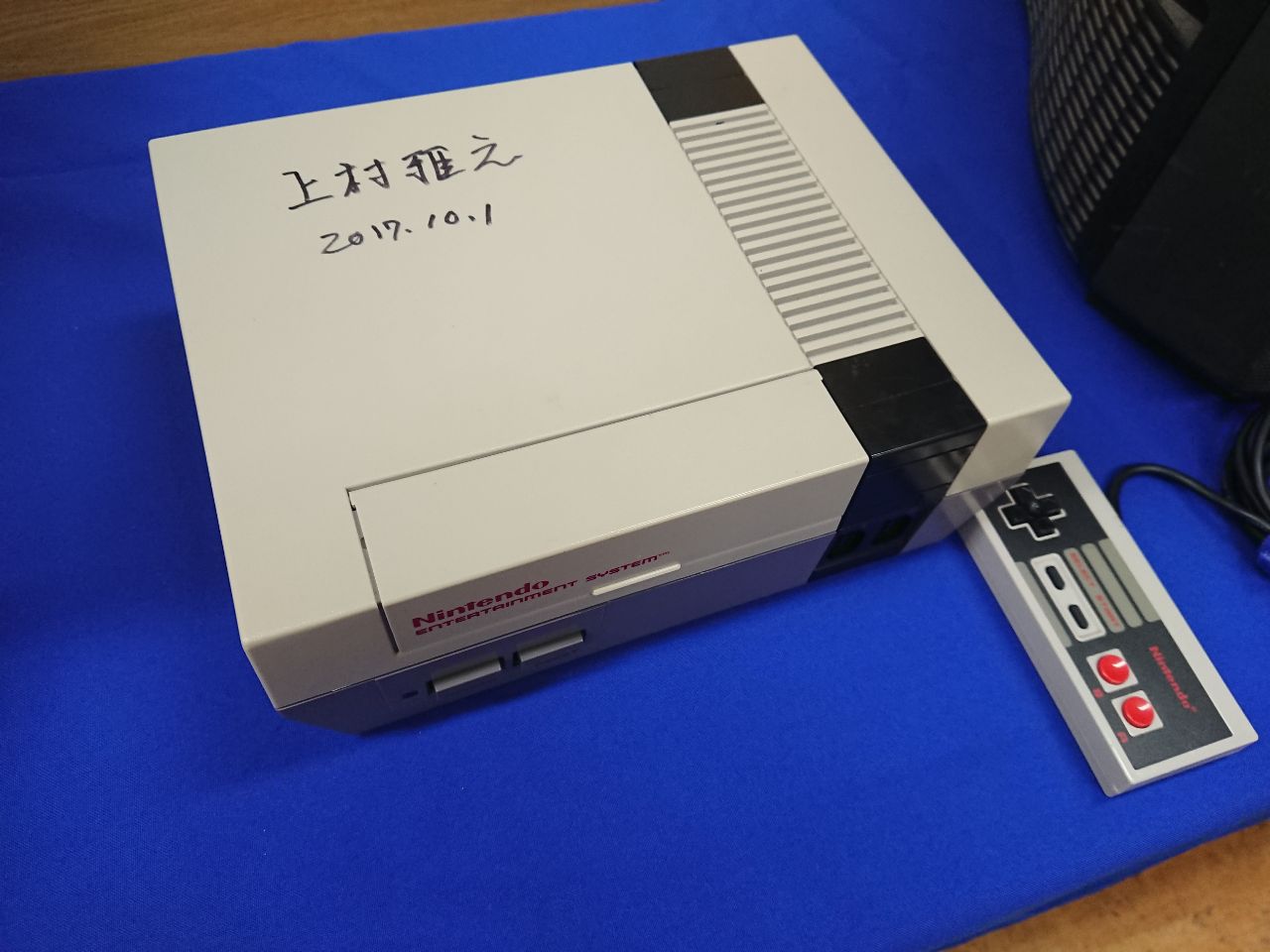
It is incredible that Uemura has been giving lectures at foreign universities even in his late age, and a member from our local video game archivist organization was extraordinarily lucky to get a NES signed from him when he was visiting Bratislava.
78 is definitely not young, and various age-related health conditions develop rather abruptly with age. While your mind might be crystal clear, the rest of the daily life is far harder at 78 than say at 48.
Most of the US is obese and unhealthy as well. If we remove child deaths from ancient Roman times it wasn’t that different not accounting for infant mortality, and in Britain for males it’s 79.
>If one’s thirties were a decrepit old age, ancient writers and politicians don’t seem to have got the message. In the early 7th Century BC, the Greek poet Hesiod wrote that a man should marry “when you are not much less than 30, and not much more”. Meanwhile, ancient Rome’s ‘cursus honorum’ – the sequence of political offices that an ambitious young man would undertake – didn’t even allow a young man to stand for his first office, that of quaestor, until the age of 30 (under Emperor Augustus, this was later lowered to 25; Augustus himself died at 75). To be consul, you had to be 43 – eight years older than the US’s minimum age limit of 35 to hold a presidency.
Ask them what age and they’ll tell you what age they think a 78 year old should look like (examples like on oxygen, can’t use legs, obese, completely wrinkly, no teeth, had 20 pills they need daily, basically on the verge of death).
Ask people how does this person look and they’ll often be surprised, epigenetic age matters more (obesity raises it for example) and when we think of age we don’t think years as much as “how old they look”. There are 50 year olds that show accelerated aging and 80 year olds that still look younger than their age. https://www.odditycentral.com/news/ripped-81-year-old-bodybu...
I’ve always found mean life expectancy an odd metric. Median life expectancy seems more useful to answer “how long am I expected to live?” and appears to be 3-4 years higher in the US.
Somehow I'd missed that one. I agree with its general point, but the "this is what SQL would look like as YAML" joke actually looks almost exactly like how I write SQL. Maybe I've been doing it wrong all these years....
I found the Ansible playbook [1] on GitHub extremely easy to use. As long as you know how to configure DNS records and firewalls, the rest is taken care of. This is what I use today to manage my Synapse server.
Also Oracle Cloud offers free ARM instances with 4 CPU cores and 24 GB of RAM, more than enough to run a very speedy Synapse server.
It's also important to read the docs for that ansible playbook, know what certbot does, setup the nginx proxy accordingly or remove the nginx proxy. Maybe I should have done this on a mint machine.
I wish there was a good Discord:Matrix bridge but I've never been able to get anything useful working nor does it seem like Discord will ever allow something like that on their platform.