In a recent thread talking about Flickr URLs I mentioned a couple of interesting technical features that Flickr had also done that I thought were worth celebrating.
When gwern mentions that you should write in more detail about those things I feel you have to take that seriously. This is that attempt.
Flickr deserves a lot of praise for a number of technical advances that I wish had seen wider adoption.
Their API was one of the first and honestly still one of the most enjoyable to actually use as a developer. It's still full of incredibly interesting API calls that you wouldn't expect from it unless you read carefully. Did you know, for example, that flickr API will provide you with the bounding box co-ordinates of different types of places? From a neighbourhood all the way up to a continent?
They implemented the Where On Earth ID (WOEID) which was a super useful way of disambiguating different places that shared latitude and longitude (for example, being able to disambiguate the Sydney Opera House, Circular Quay and Sydney Harbour which all can potentially share the same lat/long co-ords).
They implemented machine tags which are tags in the form of -
namespace:predicate=value
Which, when it was implemented by other sites with machine tags allowed you to get and group all kinds of interesting combinations of content.
Yeah, honestly flickr had some incredible tech the was so much fun to explore and use. That their vision of what the web could be wasn't the one that won is one of the great losses of the web IMO.
Don't forget their "interestingness" algorithm that would determine which photos get to the top position in groups and other shares views. Way before ML ranking.
Funnily enough, I think it was also one of the early warnings of what's coming. The problem with the Flickr algorithm was that it ended up promoting a very predictable style of photos - mostly HDR landscapes - which in turn encouraged more photographers to emulate it. In its early years, it was a fantastic place to learn photography. In the "final" years, it was extremely homogenous and, frankly, boring.
You should write all that up! (I've been around for a while and I never used Flickr except as a casual, but I did know about a lot of mashups and even spent time using FlickrLickr for Wikipedia; yet I've never heard of... any of that.)
Thanks for the reply — I might have explained the situation poorly.
Out of my five submissions, two are Ask HN posts (including this one),
and two are links to my own writing.
All four of those behaved normally, so I assumed self-links were fine.
The third link — also to my own article — is the only one that disappeared.
If all self-links were filtered, I would understand.
What confused me is that the first two stayed visible without any issues,
but the third one vanished a few hours after posting.
So I’m just trying to understand why only one of them triggered the filter.
When my wife and I lived in Bristol we developed a metric designed to measure how enjoyable a city was to live in that we called "time to sheep".
Basically it's a measure of how long you have to travel from the center of the city before you're in the English countryside surrounded by sheep and the best cities have a low (but not too low) "time to sheep" metric. It helped explain one of the reasons we loved living in Bristol so much when we had such a hard time living in London.
Could also have been that Bristol is just a crazy beautiful city to live in, but where's the fun in that, right?
Although it's not quite sheep Newcastle has a Town Moor (Larger than Central Park) which has grazing cattle. There's also a farm not too far from the city centre which has grazing sheep.
If you mean Jesmond Dene, there's a petting zoo with a few small beasts and birds. I know they have a couple of breeds of goat but I don't recall seeing any sheep on my last visit (within the last month).
You still don't need to go too far, there's a fair few farms just outside Ponteland that have grazing sheep and I'll regularly cycle past farmers with their collies on the quad bikes on a Sunday morning.
I live in Bath, so quite a bit smaller than Bristol, but I really apprecaite the fact that we can be in the city centre in half an hour, or in the countryside in 15 minutes.
If I didn't live in Bath I'd probably live in Bristol, it's a great city. And I absolutely agree that it's kind of the perfect size for a metropolitan area.
I think a lot of London is saved by having so many parks, and so many large parks and commons. I know Paris has a lot less green space than London and when I visited I definitely felt that.
Trams would be lovely, but buses would be a start! Apparently, there was once to be a new high-frequency service with six buses an hour between Bedminster and the Centre, but the residents launched a successful petition to stop the plans on the grounds that the buses would 'cause more traffic'. Twenty years on, it appears as if there are once more efforts afoot to improve the transport situation:
As a fellow Bath resident I had to see if I recognised the name (it's a small place) and turns out we have worked at the same place in Bath (although many years apart!)
Bathcamp caught my eye, may look into attending when it next comes round :)
I'm being careful not to explicitly out myself to maintain some level of anonymity here :D but safety-critical, that should help narrow it down!
There isn't a whole lot of tech stuff happening in Bath so I'll try and remember to keep an eye out to see if you go through with that!
What amazes me is how dense Westminster is, considering it contains Hyde, Green, St James Park and significant parts of Regents Park and Kensington Gardens
Even with that, it's still the 10th most dense borough.
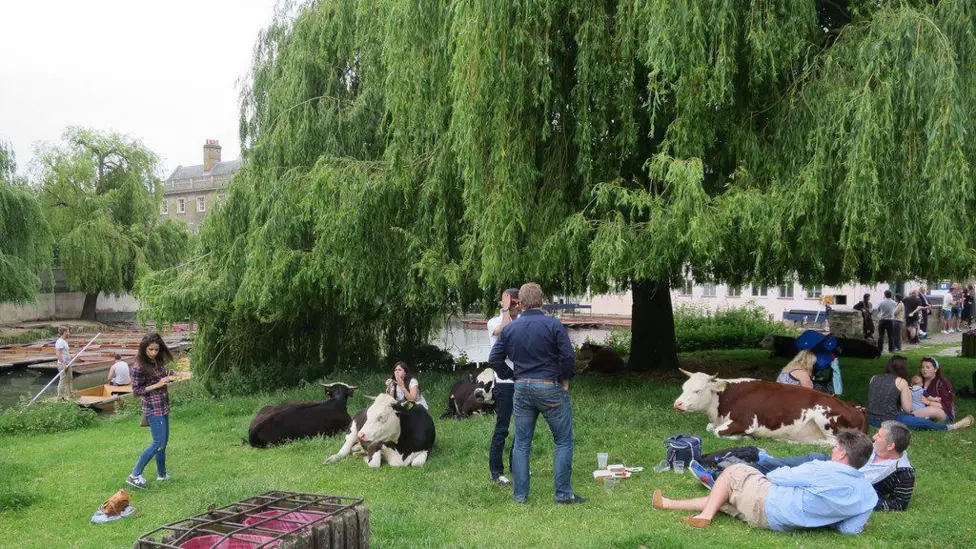
I like that metric. If we instead consider "time to cows" then Cambridge does quite well. Midsummer Common, Stourbridge Common and The Backs have (seasonal) cows.
Perfect. This is what struck us when we moved from Melbourne to Canberra. In both cities we live/d in the inner-city hipster suburb: Fitzroy, Braddon.
In Fitzroy, any semblance of a sheep is at the least an hour away. It takes that long until you even feel like you're on the outskirts of suburbia. Leaving the city is a drag; so you don’t.*
In Braddon, we can ride our bikes for 15 minutes and see grazing cows. 15 minutes in a car and you're in rolling hills. It's magnificent.
(*Which, to be fair, I didn’t really want to most of the time. That’s why I chose to live in Fitzroy! But then you get older -- 48 now -- and things change.)
Cambridge may be unbeatable this way [1]. Which is also lovely - depite the unfunctional forced mix of incompatible old and new so typical to most charmful English towns.
If your metric is time or distance to large amounts of nature, I recommend Ottawa, Canada where the 140 square mile Gatineau Park starts 5 miles from downtown.
That's probably about a good distance. Too little distance to nature is... a thing. I'm like a half hour out of Ottawa.
Gotta take it slow down the driveway because sometimes the deer like to hang out there. And in the yard. And generally everywhere.
More than once I've wandered out and found a fox standing at the sliding door staring at a cat. (They are super cute though. Watching them they look like really playful dogs.)
We have cats because of the mice.
When the snow melts we get enough standing water that the ducks come and nest here. They're not much of a nuisance, but I worry about them with the foxes prowling around.
The rabbits aren't bad either, but there seems to be a lot of infighting with them.
Had a coyote show up one time. Opened the door and asked him what the fuck he thought he was doing and he hasn't been back that I've been able to see. I'm not a great tracker or anything but I can do a decent job of differentiating the tracks in the snow.
I'm told turkeys are hard to hunt. For a good chunk of the year if I just opened my door and tossed a brick there's no way I could miss.
Made the mistake of seeing some groundhogs around and thinking "eh, they're all the way over there they're not hurting anyone and we have lots of space" and then found the posts supporting the roof of my garage sitting on top of a big hole. Pretty sure I've been hearing one under my house trying to chew his way in when I'm trying to sleep. Tried all the deterrents suggested and they really don't care. My wife wanted to trap them and go release them on someone else's property. I started out with lots of patience, .22 rounds, and good aim until they seemed to catch on. Now I've been haphazardly throwing some 7.62x39 at them.
The mosquitos are atrocious. Thankfully that meant I had some decent pesticides on hand for when I walked into the shed one day to a pile of sawdust and found out there are ants that will eat wood. They'd also decided to move into my mailbox.
I also have some herbicides for the poison ivy and do my best to not mow it because I don't really want to be hospitalized. It's hard though because when you're up on a tractor we have a _lot_ of plants that look pretty close and if you don't mow the hell out of the edge of the forest it expands very quickly.
Speaking of hospitalized--made sure I was up-to-date on my tetanus and stuff. I don't know if I'm the only person crazy enough to care but that was a whole fucking thing to find someone to do that preemptively.
Oh, went out to clear the snow today and chewed a mouse up with the snowblower because of course.
I bitch, but I really do just try and see myself as the keeper of this nature. If it weren't for the mosquitos and groundhogs it'd all be pretty good.
> chewed a mouse up with the snowblower because of course.
LOL, I've done that too. I figure it must have been dead prior to being chewed up because snowblowers announce their presence fairly definitively.
We're probably much more urban than you, but we've got a ravine connection to the greenbelt, so do get all of the above. Has been a bear in that ravine, but didn't see it ourselves.
A better metric imho would be time to a wild animal. I'd go with distance to a wild bear, or anything else that could threaten a human. That is where wilderness starts imho. For London, that measurement is likely hundreds of miles. In much of north america, it is probably be less than one. I've been to the English countryside. It is more city park than open country.
The distance from my home to a mountain lion has been documented at under a mile in the last year. They are officially spotted within a few miles every couple years, but I'm quite confident they're almost always there and just usually better at hiding. I would not consider my location in the middle of suburban sprawl to be anything like wilderness. I'd say you're looking at a 6 hour trip minimum from my location to anything anyone could argue as being wilderness.
If we're going as simple as time to a wild animal, we've had fox in the front yard and I see turkey and deer within a couple of blocks of my place often enough that I wonder if they don't sometimes order at the fast food drive thrus on either end of the neighborhood. I live as far from a cornfield as I ever have right now and that doesn't seem to phase the wildlife.
Back to the article though, they seem to be measuring the distance from town to rural surroundings. At no point do they mention wilderness, rugged landscape, or any kind of danger from the environment. They're measuring to the nearest bit of pasture. Things that can eat you don't factor into it.
Richmond park has Adders and Deer, both of which have the potential to kill you - but in practice would be very unlikely to. To get to the nearest wild wolf you'd probably have to look as far as the Ardennes in Belgium, which is roughly 400km away. For bears you'd probably be looking at 1000km or so in the Pyrenees on the French/Spanish border.
Meanwhile, in Canada, I lived in a metro area of 2.5m people--in a nice little quiet neighbourhood--where the 500 acre park down the block had signs warning people to keep an eye out for bears.
We had a wild bear with cubs go into the dumpster for food at our university campus, this is North America of course.
I don't know London at all but I would hazard that you have foxes and other wild animals living in the city, just well hidden. We have coyotes that have taken up residence in many American cities.
There needs to be a counterbalancing variable, though; presumably you want to live in a city, otherwise you'd just live in the countryside somewhere with a TTS of zero :) Maybe the other factor is "time for pizza to arrive at door"?
there's presumably pizza in the smallest towns tho, I'd suggest Time To Theatre. Not because of the Theatre per se, but because "big enough to have a theatre" is probably a good proxy of "big enough to be appealing to people who enjoy something other than nature".
In Indiana, my favorite dinner theater is in a town of 500 people.
For a while, someone was trying to start a theater in an even more remote spot, an unincorporated community about an hour from there with maybe a dozen homes nearby, but they finally moved it to a large town.
I think by "theater" the OP was implying professional theatre. Lots of small towns have theater, but professional theatre is a much higher bar.
In my case, my old workplace in Ottawa, Canada had a "time to moose" of about 5 miles and a "time to theatre" of about 1/2 a mile. Sadly, the professional Opera company in Ottawa went bankrupt so we only have amateur Opera now, but we do get regular professional Broadway productions so it still counts.
Not sure how it is in Ottawa but here in the US Midwest distances are frequently measured in units of time. I might say I'm an hour from Green Bay or two hours from Madison, though I don't remember the actual mileage. That said, it usually only applies to distances over 20 minutes (between 7 and 25 miles, depending on speed limits).
That practice is pretty widespread in Canada. Ever since metrification nobody is really sure whether the person they're talking to is more comfortable with miles or kilometres. So they just use time.
Presumably this could be quantified through a call to something like the Google maps api for a specific lat/long starting point, for driving, walking or biking time in minutes, as an SLP (sheep latency protocol)
I like your metric. I aim to get my time-to-sheep number down below 60 seconds. But if you mean "within a car driving down the road's distance to sheep", then I aim to get it to 0.
This only makes sense if you enjoy the English countryside.
I'm an Irishman. I grew up in the countryside, in the west, and spent 15 years living in London in my 20s and 30s. I can count on one hand the number of visits to the English countryside I made that weren't on the back of a motorcycle, and then, I didn't stop except for petrol.
The city is what I enjoyed, the chaos, the diversity, ambition, variety. No smaller city would be as good.
I have lived my entire life in a a rural area, not even a town and it seems to me that every time I go to a city it is the same as the last. Everyone has their thing I guess.
Sometimes you can. Depends what you want out of it. I've only spent a very short time in London, but I live in New York, and some evenings all I need to do to be happy is walk to the middle of the Brooklyn Bridge and look at the lights and the people. Same reason I don't really need an itinerary if I head upstate - it's enough to find a random mountain, climb it, and look at the trees and lakes. Just getting to know the feeling of a place can be very special.
I am not sure what you mean by that. Do cities not want people to visit them? You can't travel through a city unless you commit to live there for a while?
I’m saying that if you want to enjoy a city you should find things that you enjoy to do there. If you just show up it’s not surprising that you’ll be unimpressed.
Here in Germany I run an inverse of that for "am I in the wider halo of a larger city or am I in a truly rural environment": when approaching a metropolitan area, the outer urban halo starts where there are still farms, but many of them have switched to housing horses.
What I found striking about Seoul was that there would be three rows of potatoes in between a ten story apartment block and a busy highway. Not a square meter wasted on unproductive grass.
In the broadest possible sense, Idaho can be divided into "potato" and "non-potato" Idaho. For instance if you drive US95 through here (the creatively named Idaho County, Idaho) it's almost entirely wheat farms, and what isn't a wheat farm is either forest, wilderness or cattle ranch. The potato part doesn't really start until you get down into the whole valley/flat land area occupied by Meridian, Boise, Nampa, etc.
So I'll caveat this by saying we were a couple of Australians living in the UK and one of the big differences we noticed between Australia and the UK is just how damn clearly delineated the seasons are in the UK. In Australia they all kind of smudge into one another while in the UK it's really very clearly 4 very distinct phases of the year.
One of the byproducts of this is that we found UK winter in London to be pretty damn hard to get through. London is an incredible city and there's a lot to love about it, but the winters are honestly a fucking slog. We discovered that UK winters are way more tolerable if you have the opportunity to get out into the countryside with proper gear and just enjoy the natural beauty as much as possible. It a cliche, but there is something delightful about a big walk in the cold that ends at a country pub with a good meal and a roaring fire.
Bristol in particular is a beautiful city for a number of reasons.
Decent sized - so there's always something to do and jobs and conveniences are available (at least pre-Brexit)
Amazing music pedigree - still good for live music and some incredible bands came out of Bristol and surrounding areas.
University town - so good nightlife and fun things to do.
The river Avon - it's a river town which allows for lovely walks and natural beauty
Decent hospitality - Coffee in the UK is often seen as a fucking crime scene by Australians but there are decent independent cafes here and there in the city
Engineering history - The man with the best name in the world Isambard Kingdom Brunel was an incredible engineer from Bristol who left his mark in a number of ways (not least the extraordinary Bristol suspension bridge which we lived almost directly under)
It's just really beautiful - things like the pastel painted houses along the hills of the city make it incredibly picturesque
If we are selling Bristol I need to add one more to the list.
- Bristolians are a big part of what makes Bristol an amazing and 'gert lush' city.
It was the most laid back and enjoyable place I have lived in my time in the UK largely because the people around me were also super welcoming and open-minded.
Neighbours, work colleagues, random people in pubs/concerts, many are still long term friends.
The University openness ethos permeates the city i suppose, but it was kind of the closest I felt in a large city to the 'village/community experience'.
On your 2nd paragraph, I love in London and go hiking every now and again. What about London made it hard to get to the country? 30 mins on the train and you're out there!
It's just a question of ease. Where we lived in Bristol (Hotwells) we were exactly 28 minutes walk from Queen Square in the center of the city where I worked and 29 minutes in the other direction to Ashton court estate which is a deer farm and 340ha estate owner by the City of Bristol.
Granted this photosphere [1, best on desktop, not mobile browsers] is not the view you would have whilst walking around, but it does evidence some sheep-accessible urban environs
I think my hometown has a “time to sheep” rating of like 30 seconds. Possibly up to as much as 4 or 5 minutes if you pick your starting spot perfectly.
I think my hometown has a TTS of 0. It's in a valley surrounded by low-laying sheep-populated hills. Unless you start indoors or really well positioned between buildings you can probably see sheep from everywhere!
> Bristol was the only UK city participating in last year’s research.
London’s wastewater, which has previously topped the cocaine chart, was not included.
> a metric designed to measure how enjoyable a city was to live in
Your metric of how enjoyable a city is to live in is based on how long it takes to leave that city? The logical endpoint of that is moving to the countryside where the TTS = 0, which is very easy to achieve. Begs the question, why are you even living in a city at all?!
100% agree with this. I would say that the other highly likely mistake new managers make is trying to code their way out of problems. It makes sense, right? Previously when you're an IC and a project ran into issues you could just "code harder" and get through it, but that's rarely the right solution when you're a manager and will likely exacerbate the problem itself if you disappear into the trenches trying to code your way through a critical path. Your role is no longer primarily solving coding problems it's solving people problems.
I made that mistake as a new manager by picking up a small but important task in an area I knew well. I thought it would help unblock the team, but I didn't realise I was about to go into three days of back to back meetings. After the third stand-up in a row of reporting zero progress I sheepishly reassigned the ticket to someone else, and didn't make that mistake again.
Refactors, doc fixes, low priority bug fixes, and tech debt are all fair game for managers to pick up. I do think it's important to keep your hand in.
Honestly, in an industry that talks about how important collaboration is and then places the most authoritarian minded individuals as our lauded CEOs (Musk, Bezos, Gates, Jobs, etc, etc) I just find Charity such a fucking breath of fresh air in terms of communication style and the way she talks about and clearly lives her principles. Honeycomb may not be FAANG-sized, but I'd genuinely give more to work under her than any other current CEO I can think of.
I mean, most "servile" people don't think of themselves that way; usually, they only do—if some third party actor managed to impose their judgement on them, fuelled by the actor's own resentment, or personal gain. For instance, this is the basis of communism. "You may make some money, do well for yourself, but you would always remain a prol. Associate. Dissociate. Associate..." This reasoning had determined the structure of Soviet agitprop, and coincidentally, underpins all of modern propaganda, too. (Although "Economics" is not necessarily the subject, as people really don't care about money too much, and how it's distributed, which is what you would expect.)
Most people don't feel compelled to "Skip forward"—they don't bother, and much happier for it.
Until they do, of course, but that's politics for you.
If you frame yourself according to a collective, if you are not an individual, you are bound to have a servile (or master) outlook - either is fine. People who don't define themselves according to the group/political/nation/religion/sportball team are the problem.. and left out of the discussion. They are the definition of 'idiots'.
One of the fun things you can do is using the set of places API methods.
flickr.places.findByLatLon returns a placesId based on a supplied lat/long of somewhere you might be interested in.
You can then use that placeId to get photos around that location with a call to flickr.places.getChildrenWithPhotosPublic
Even more amusing is that you can get the actual shape co-ordinates for that place (for example the shape values or the polyline values of your local suburb or city).
I can tell you that I didn't expect to be able to access the shapefiles, bounding boxes and polylines for essentially every suburb I needed for a location based app I was building 10 years ago from a photo app API.